
 EN


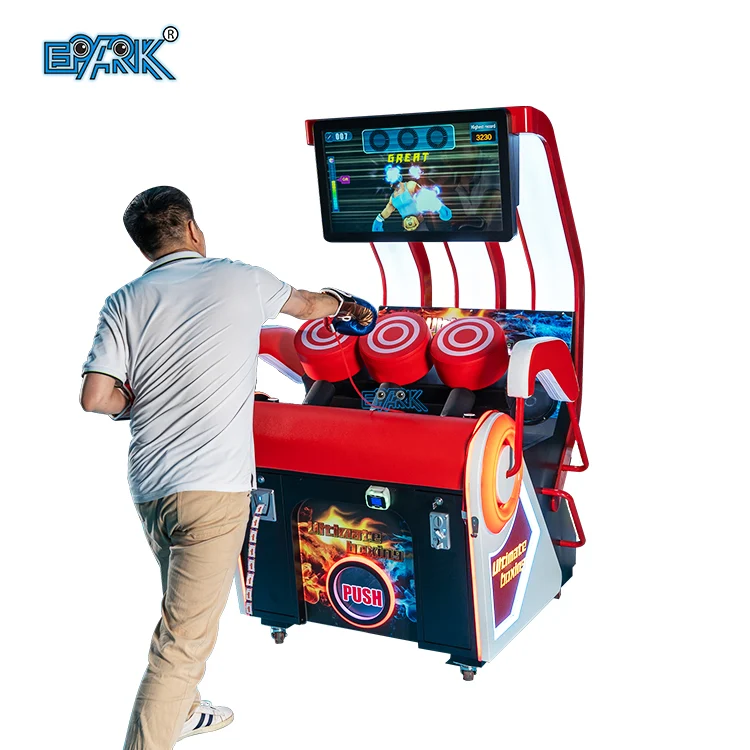
High ROI and Low Footprint: Why Commercial Boxing Machines Belong on Your Arcade Floor
Ask any Family Entertainment Center (FEC) operator about their biggest space constraints, and most will point to the same reality: every square meter on the floor carries a real rent cost. Large multi-player rides and immersive VR pods are effective at drawing first-time crowds, but they also demand significant floor area, ongoing technical maintenance, and substantial upfront capital. When operators review their weekly token and ticket revenue reports, one relatively compact category consistently performs well: the commercial boxing machine. In a fast-paced game room, keeping capital expenditure reasonable while maintaining a low-touch operation is what protects margins, and a punching strength tester fits that role well, offering immediate physical engagement and steady revenue without requiring a dedicated attendant.
The Psychology Behind Repeat Play: Friendly Competition Drives Crowd Behavior
Commercial boxing machines have remained a staple in arcades for decades because they align with common player motivations. Most players enjoy a short, physical challenge, a way to release stress, and an opportunity to compare performance with friends. Unlike passive ticket games where players watch balls drop or wheels spin, a punching game encourages movement and contributes audible energy to the room. When a player lands a solid punch, the impact registers as a bright digital score visible to everyone nearby. That instant visual feedback tends to draw onlookers: friends start comparing scores, bystanders step up to challenge the current leader, and a single round can quickly expand into a group session. Group play naturally supports repeated credit insertions, as players continue attempting to claim the top position on the leaderboard.
Built for Commercial Duty: Engineering for High-Frequency Use
From a hardware engineering perspective, a commercial-grade boxing machine must withstand thousands of impacts while maintaining reasonable calibration accuracy. Lower-cost home units or light-duty imports commonly develop mechanical issues within months, including torn bladders, drifted sensor readings, and out-of-order periods that reduce daily earnings. Professional commercial units use a different design approach: impact-absorbing padding covered in heavy-duty commercial-grade vinyl or leather, mounted on a welded steel chassis with precision strain-gauge pressure sensors behind the pad. Units certified to common safety standards (such as CE for the EU market) generally include reinforced wiring looms, rated spring mechanisms, and hydraulic shock absorbers designed for continuous-cycle operation. Optical position sensors and heavy-duty internal solenoids are also commonly specified to reduce wear on moving parts, which helps site managers keep unscheduled maintenance to a manageable level.
Smart Space Efficiency: How Much Floor Space Does a Boxing Machine Actually Take?
A standard commercial boxing machine cabinet typically occupies roughly 1 to 1.2 square meters of floor footprint, with a required play arc of about 1.5 to 2 meters in front of the pad — meaning the total effective area is often under 4 square meters, including player clearance. Despite that modest footprint, these machines frequently rank among the top earners in the sports redemption section of an arcade floor, according to common operator feedback shared in industry forums and trade publications.
Modern commercial units are designed to integrate with most existing payment ecosystems: traditional coin acceptors, bill validators, tap-to-pay card readers, and venue-wide RFID game cards are all commonly supported. Operators can also configure reward logic from the cabinet menu, switching between high-score-only tracking, ticket dispensing, or prize-linked modes. Adding a daily high-score bonus — for example, a small ticket bonus or a branded keychain — gives players an additional reason to step up, and many operators report that this kind of reward loop shortens the perceived payback period compared with a straight pay-to-play setup.
Modern Upgrades: LED Lighting, Audio Feedback, and Remote Fleet Management
Today's commercial boxing cabinets differ noticeably from the purely mechanical units of the 1990s. Current models generally include an internal motherboard controller, customizable LED lighting strips, and a speaker system engineered to deliver a low-frequency thud on impact rather than a flat beep. That sensory feedback helps the machine remain noticeable even in a crowded, noisy game room.
Beyond the cabinet itself, many commercial units now include cloud or LAN backend management. Venue owners can review daily revenue, total play counts, average score per play, and adjust hit-difficulty curves or pricing settings from a mobile dashboard or desktop portal. This kind of visibility reduces the need to open each cabinet physically on a daily basis, and it makes it easier to compare performance across multiple locations in a chain.
Choosing a Manufacturing Partner: What Operators Should Look For
Selecting the right cabinet is only one part of the decision; the manufacturing and after-sales support behind it directly affects long-term uptime. EPARK is one of several suppliers serving this segment, operating a dedicated production facility and supplying FECs, shopping malls, and arcade distributors in multiple regions. Operators evaluating suppliers in this category typically ask the same set of questions: what pre-shipment testing is performed, what packaging standard is used for sea freight, what warranty period is offered, and how replacement parts are stocked regionally. A supplier that can answer these questions in writing — and provide reference installations — tends to reduce the operational risk that comes with importing amusement equipment.
Summary
A commercial boxing machine is not a substitute for headline rides, but it is a consistent floor-space performer: small footprint, low staffing requirement, strong social play loop, and a relatively straightforward maintenance profile. When evaluating options, operators should compare cabinet footprint, sensor type, payment compatibility, backend reporting, and supplier warranty terms side by side, rather than relying on marketing claims alone.
Table of Contents
- High ROI and Low Footprint: Why Commercial Boxing Machines Belong on Your Arcade Floor
- The Psychology Behind Repeat Play: Friendly Competition Drives Crowd Behavior
- Built for Commercial Duty: Engineering for High-Frequency Use
- Smart Space Efficiency: How Much Floor Space Does a Boxing Machine Actually Take?
- Modern Upgrades: LED Lighting, Audio Feedback, and Remote Fleet Management
- Choosing a Manufacturing Partner: What Operators Should Look For
- Summary