
 EN
EN


A New Operator’s Wake-Up Call
A Family Entertainment Center operator in Romania once made a costly assumption. He thought any VR machine would bring in crowds, so he bought the cheapest units he could find. The initial savings felt like a win—until the machines started breaking down. Each breakdown during peak weekend hours meant lost revenue, frustrated customers, and endless calls to a supplier who rarely answered. He eventually replaced the machines with higher-quality units from a supplier with a proven support system. The higher upfront cost paid for itself within months through consistent uptime and repeat business. The lesson? For commercial VR, the lowest purchase price is rarely the most profitable choice.
Understanding the Economics of VR Attractions
The financial reality of VR in an FEC is compelling. A mid-sized VR attraction can achieve payback on its initial investment in 18 to 30 months, after which operators can expect to generate an additional $25,000 to $35,000 in net profit annually . The key factors driving this performance are operational hours and peak-day throughput. A well-located single-unit simulator can generate weekend revenue of up to $768 per day . Multi-player arenas offer even higher revenue density: an 8-player free-roam zone processing 40 players per hour at a $6 ticket price produces approximately $240 per hour, roughly ten times the hourly revenue of a traditional arcade cabinet per square meter . The expansion of the market is also accelerating the business case. The VR arcade market is projected to grow from $2.7 billion in 2024 to $8.5 billion by 2029, reflecting a compound annual growth rate of 25.4% .
Looking Beyond the Sticker Price
The total cost of ownership tells a very different story from the initial price tag. An analysis comparing a $6,500 budget VR simulator with an $18,000 mid-range unit revealed that the premium machine was actually $11,700 cheaper to operate over three years . The budget unit's projected revenue loss from downtime alone ranged from $6,000 to $38,000 over that period—potentially exceeding its original purchase price . The crossover point where the premium machine becomes the more economical choice typically falls between month 8 and month 14 of operation . For an FEC running a 10-hour day, 300 days a year, those lost weekend hours add up fast.
Matching the Simulator to the Venue
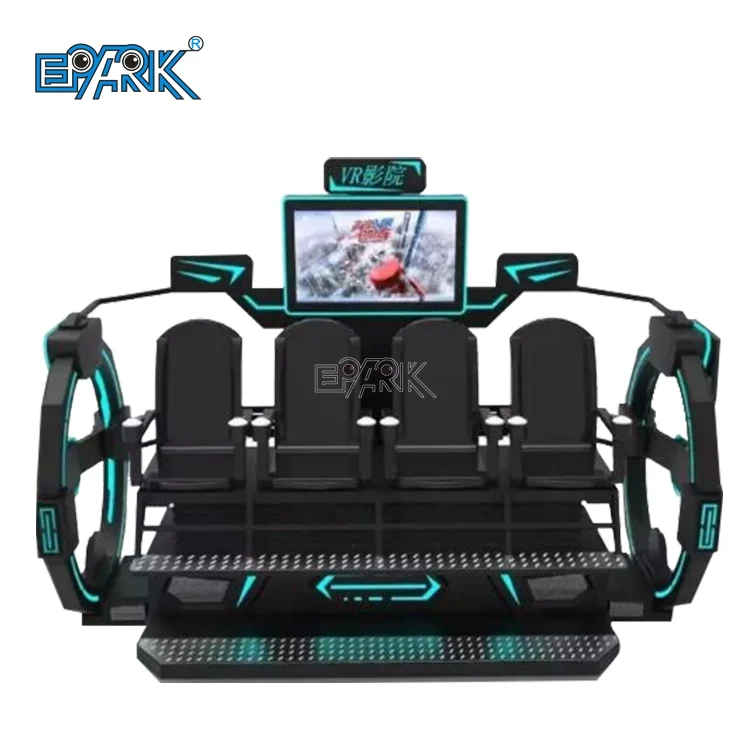
The right VR simulator depends on your space, budget, and target audience. Compact single-seat attractions like racing simulators or 360° motion chairs occupy as little as 2–4 square meters and are ideal for high-turnover locations like mall kiosks or cinema lobbies . Mid-size multi-seat simulators accommodating 2–6 players serve as anchor attractions that draw crowds and generate group bookings, making them a strong fit for medium to large FECs . Larger multiplayer arenas require more space but deliver the highest revenue density and social engagement. For many venues, a hybrid layout—one or two high-end units to attract attention, paired with 3–5 efficient single-seat units for volume—offers the best balance of appeal and profitability.
Content and Support: The Hidden Profit Drivers
A VR simulator’s profitability depends on keeping players coming back. Venues that fail to update their content at least twice a year see repeat visit rates drop by 25% to 40% . Budget suppliers often provide limited titles with unclear update policies, while established manufacturers typically bundle quarterly content updates into their support packages—a service that can save $1,000–$3,000 in ad-hoc fees over two years . Equally critical is after-sales support. Reliable suppliers maintain documented spare parts inventories and offer remote diagnostic capability, keeping downtime to 1–3 days per incident . In contrast, unverified suppliers may leave operators waiting weeks for replacement components, turning a minor issue into a major revenue loss. Working with a single partner that provides hardware, software, and support simplifies the operation and reduces integration risks.
What Operators Are Saying
Real-world operator feedback underscores the importance of these factors. A UAE arcade owner reported that after installing new machines, "player traffic increased quickly and revenue is growing every week" . A Mexico distributor noted that "good quality and fast delivery" were critical to their success, adding that a capable supplier helped them "choose the right machines for our local market" . A Romanian FEC operator emphasized the importance of reliability, stating that the "stable machines" were "perfect for long-term business and daily operation" . These testimonials highlight a consistent theme: profitability depends on equipment that works, content that engages, and support that delivers.
Selecting a Partner That Delivers Long-Term Value
The profitability of a commercial VR simulator is a direct reflection of the manufacturer's engineering capability, quality control, and support infrastructure. The right manufacturing partner combines scale, quality, and a complete support infrastructure—from integrated R&D and in-house production to responsive after-sales service—to turn a significant capital investment into a consistent, long-term profit center. Over 15 years of industry experience, a substantial manufacturing footprint, and a portfolio of hundreds of proven machine models are the hallmarks of a supplier that can deliver the durability and value that commercial operators require. By ensuring rigorous quality control and a reliable supply of spare parts, a capable partner helps protect an FEC operator's revenue stream and ensures the equipment remains a crowd-pleasing attraction for years to come.