
 EN


Introduction
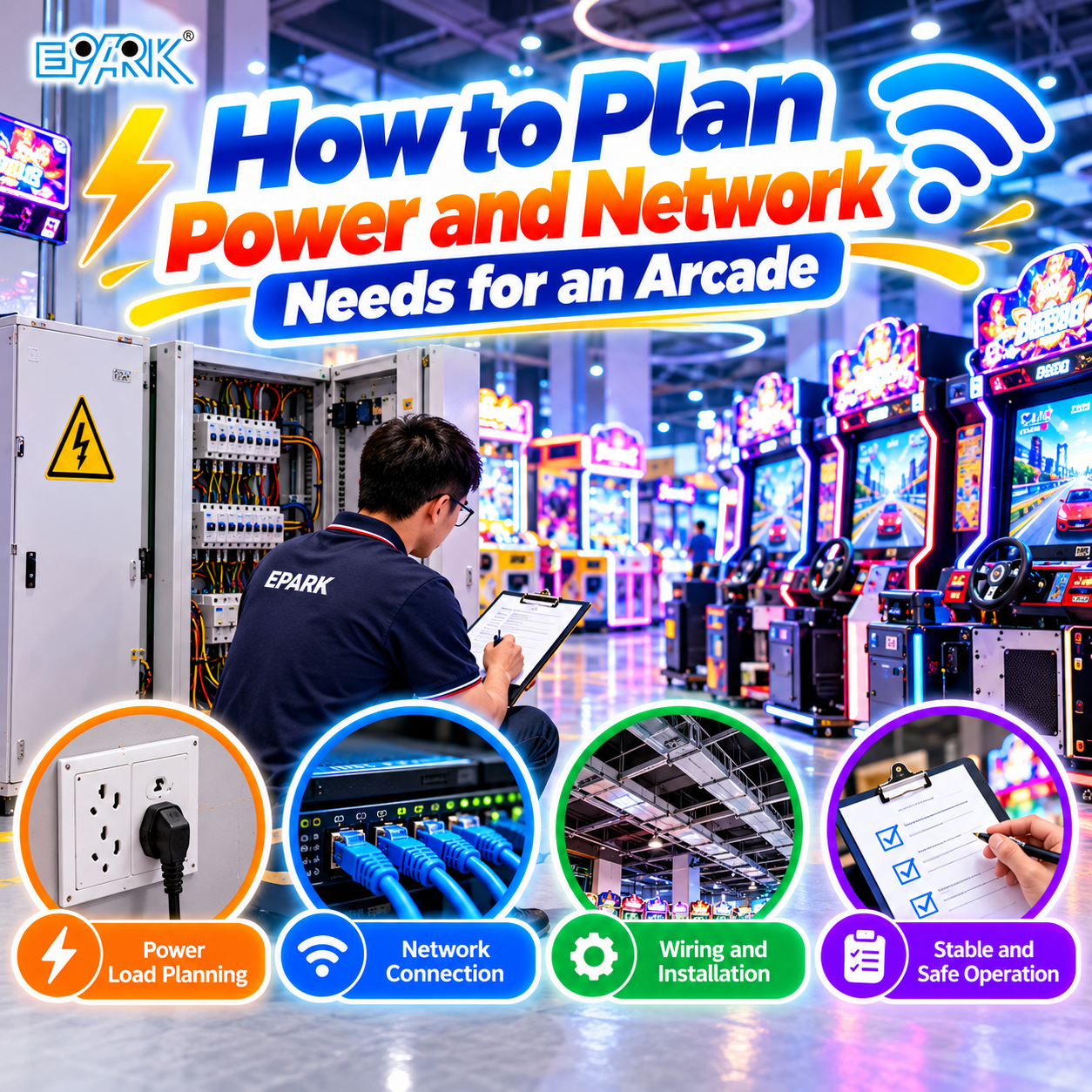
Opening a commercial arcade or family entertainment center (FEC) requires more than choosing attractive game machines and designing an engaging layout. Behind every successful entertainment venue is a reliable electrical and network infrastructure that supports daily operations.
Commercial arcade machines use different amounts of electricity depending on their size, display systems, lighting, motors, and interactive features. Some equipment also requires network connections for payment processing, centralized management, or multiplayer functions.
Without proper planning, operators may face insufficient electrical capacity, inconvenient cable placement, unstable network connections, and unexpected installation expenses.
For arcade investors, FEC operators, and entertainment equipment distributors, understanding these requirements before purchasing machines can help prevent costly modifications after delivery.
Understand Arcade Machine Power Requirements
Different types of arcade machines have different electrical requirements.
A compact claw machine may consume less electricity than a large multiplayer racing simulator or motion-based VR attraction. However, actual consumption depends on the specific model and operating conditions.
Before purchasing equipment, request the manufacturer's electrical specifications.
Important information includes rated voltage, frequency, power consumption, and connection requirements.
Operators should also confirm whether the machine requires a dedicated electrical circuit or additional protective equipment.
Using accurate specifications helps ensure that the venue's electrical system can support the selected machines.
Calculate the Total Electrical Load
Once equipment specifications are available, the next step is to estimate the combined electrical demand.
For preliminary planning, operators can add the rated power of the selected machines to estimate their total connected load.
For example, consider a venue planning to install:
10 claw machines rated at 200 W each
5 racing machines rated at 800 W each
5 redemption machines rated at 300 W each
The combined rated power would be:
2,000 W + 4,000 W + 1,500 W = 7,500 W
This equals 7.5 kW of connected arcade equipment load.
However, this calculation is only a preliminary estimate. Actual circuit sizing must also consider operating current, startup demand, equipment power factors, continuous loads, and applicable electrical regulations.
A qualified electrical professional should verify the final system design.
Confirm Local Voltage and Electrical Standards
Electrical standards vary between countries and regions.
Some markets commonly use 110–120 V electrical systems, while others use 220–240 V supplies.
Power frequency may also differ.
Before importing commercial arcade machines, buyers should confirm the electrical standards used at the installation site.
The machine's rated voltage and frequency must match the intended power supply or an approved conversion solution.
International buyers should communicate their destination country and electrical requirements to the manufacturer before production.
Any requested voltage customization should be confirmed in writing.
Plan Electrical Outlets and Circuit Distribution
Electrical outlet placement should be considered during the arcade layout design process.
Installing machines before planning power connections can result in inconvenient cable routing and additional renovation work.
Operators should identify the planned location of each machine and coordinate outlet positions with the electrical contractor.
Important considerations include:
Equipment power requirements
Outlet locations
Circuit distribution
Grounding arrangements
Cable protection
Access for maintenance
Emergency power isolation requirements
Large equipment or machines with significant electrical demand may require dedicated circuits, depending on the manufacturer's instructions and local regulations.
Avoid relying on overloaded extension cords or temporary wiring for permanent commercial installations.
A properly designed electrical system supports safer and more reliable operations.
Consider Power Requirements for Different Game Categories
Arcade equipment categories may have different electrical characteristics.
Claw Machines
Claw machines typically use motors, lighting, electronic control systems, and payment devices.
Operators should confirm rated power and ensure that outlets remain accessible for servicing.
Racing Arcade Machines
Racing machines may include large displays, speakers, steering feedback systems, and motion components.
Multiplayer installations may require several power connections or additional electrical capacity.
Basketball and Redemption Machines
These machines can include sensors, lighting, ticket dispensers, and mechanical systems.
Power requirements vary according to the model and configuration.
VR Entertainment Equipment
VR attractions may use computers, displays, tracking equipment, motion systems, and additional effects.
Operators should review the complete equipment configuration rather than estimating electricity requirements from the main cabinet alone.
Determine Which Arcade Machines Need Network Connections
Not every commercial arcade machine requires an internet connection.
Many standalone arcade machines can operate without continuous network access.
However, certain systems may require local networking or internet connectivity.
Examples include:
Centralized arcade management systems
Card payment and cashless systems
Remote equipment monitoring
Multiplayer gaming networks
Software update services
Selected online game functions
Before installation, buyers should confirm which machines require network connections and whether those connections are mandatory or optional.
This information helps avoid unnecessary infrastructure costs.
Choose Between Wired and Wireless Networking
Commercial entertainment venues may use wired Ethernet, wireless networking, or a combination of both.
Wired Network Connections
Wired connections are often suitable for fixed equipment requiring consistent network communication.
They can be useful for centralized management systems, payment infrastructure, and supported multiplayer configurations.
Wireless Network Connections
Wireless networking may provide flexibility for compatible equipment and certain management applications.
However, wireless performance depends on signal coverage, interference, network congestion, and building conditions.
For critical systems, operators should follow the recommendations of the equipment and payment system providers.
The best network design depends on the venue layout and the technical requirements of the installed machines.
Protect Payment and Management Networks
Network security is particularly important when arcade machines connect to payment or business management systems.
Operators should avoid treating all connected devices as one unrestricted network.
Where appropriate, payment systems, administrative computers, guest Wi-Fi, and gaming equipment should use separate network segments.
Additional security practices include using strong authentication, applying supported updates, limiting administrative access, and maintaining suitable network equipment.
For cashless payment systems, operators should follow the security requirements provided by their payment service providers.
A secure network helps protect business operations and reduces the risk of unauthorized access.
Prepare for Power Interruptions and Network Failures
Unexpected power interruptions and network failures can disrupt arcade operations.
The impact depends on the equipment involved.
A standalone game may resume normal operation after power is restored, while a centralized payment system may require additional recovery procedures.
Operators should understand how their machines behave during shutdowns and restarts.
For essential network devices or management equipment, suitable backup power solutions may be worth considering.
Any uninterruptible power supply should be selected according to the actual electrical load and equipment requirements.
Staff should also understand basic recovery procedures and know when technical assistance is necessary.
Coordinate Infrastructure Planning With Arcade Layout Design
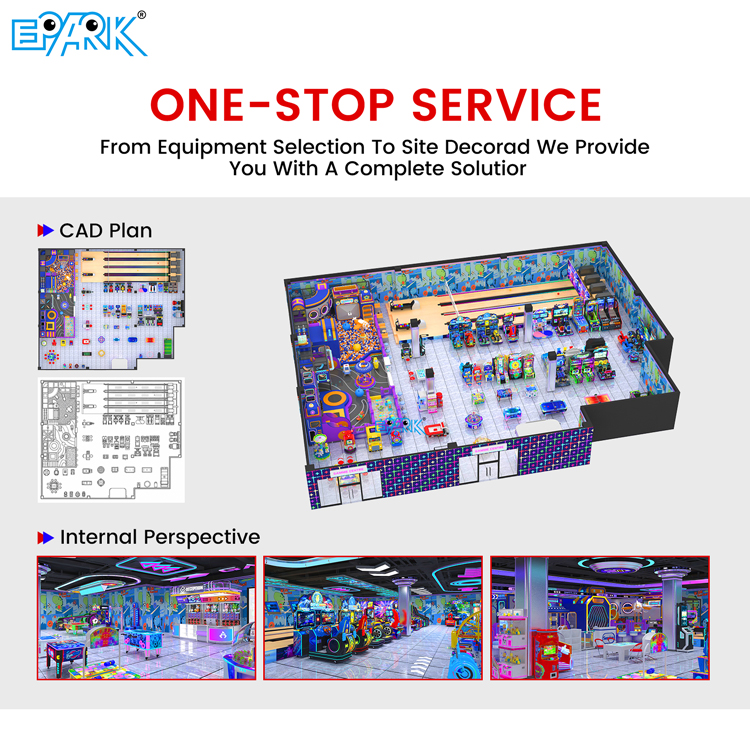
Electrical and network planning should be completed alongside the equipment layout.
Machine placement affects outlet locations, cable routes, maintenance access, and network coverage.
For example, a racing game zone may require multiple electrical connections, while a centralized payment counter may need network access for management equipment.
Planning these requirements early helps reduce installation conflicts.
Operators should also leave flexibility for future machine replacements or additional equipment.
This can make later expansion easier without requiring extensive infrastructure changes.
Verify Requirements Before Equipment Delivery
Before arcade machines are shipped, buyers should confirm that the venue is ready for installation.
A practical pre-delivery review should include electrical capacity, outlet availability, network requirements, and equipment access routes.
The operator should also confirm machine dimensions, packaging details, and any assembly requirements.
For international projects, communication between the equipment supplier, electrical contractor, and venue management team is particularly important.
Identifying infrastructure problems before delivery can help avoid unnecessary delays.
Work With an Experienced Arcade Machine Manufacturer
Reliable equipment information makes infrastructure planning more accurate.
An experienced manufacturer should provide model-specific electrical specifications, installation guidance, and available configuration options.
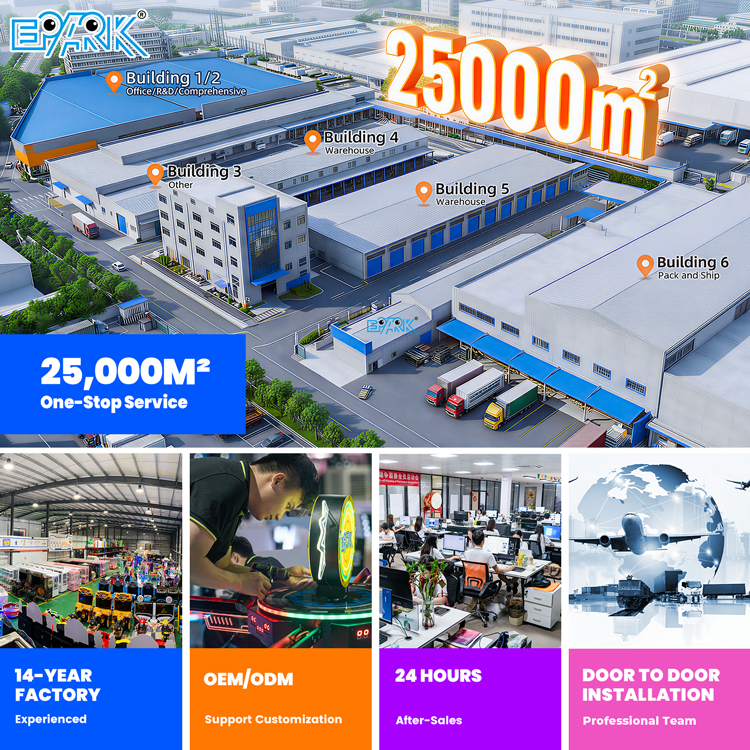
EPARK is a professional commercial arcade machine manufacturer based in Guangzhou, China, with over 14 years of manufacturing experience.
Our product range includes claw machines, racing arcade games, redemption machines, basketball games, boxing machines, VR entertainment equipment, and other commercial amusement attractions.
EPARK supports international FEC operators, distributors, and entertainment investors with equipment selection, project planning, customization, manufacturing, quality inspection, and after-sales assistance.
For new arcade projects, our team can help buyers review equipment specifications and installation requirements before confirming their orders.
Explore our products and entertainment solutions at EPARK Game Machine Factory.
Frequently Asked Questions
How Much Electricity Does a Commercial Arcade Need?
The electricity required depends on the number and type of machines, their rated power, operating conditions, and additional building systems.
Operators should calculate the preliminary connected load and have the final electrical design verified by a qualified professional.
Do All Arcade Machines Need an Internet Connection?
No. Many standalone arcade machines operate without internet access.
However, certain payment systems, management platforms, multiplayer functions, and remote monitoring services may require local or internet connectivity.
Should Arcade Owners Plan Electrical Systems Before Buying Machines?
Yes. Preliminary electrical planning should begin during equipment selection.
Buyers should obtain machine specifications and coordinate with qualified contractors before finalizing the installation layout.
Conclusion
Power and network planning are essential parts of developing a reliable commercial arcade or family entertainment center.
By reviewing machine specifications, calculating electrical demand, preparing suitable outlets, and identifying network requirements, operators can reduce installation problems and improve operational readiness.
Electrical safety, payment network security, and future expansion should also be considered during the planning stage.
For international arcade investors and FEC operators, coordinating infrastructure requirements with equipment suppliers before production and delivery can help create a smoother project installation process.
Visit EPARK Game Machine Factory to explore commercial arcade machines and discuss equipment specifications, customization options, and project planning requirements.
Table of Contents
- Introduction
- Understand Arcade Machine Power Requirements
- Calculate the Total Electrical Load
- Confirm Local Voltage and Electrical Standards
- Plan Electrical Outlets and Circuit Distribution
- Consider Power Requirements for Different Game Categories
- Determine Which Arcade Machines Need Network Connections
- Choose Between Wired and Wireless Networking
- Protect Payment and Management Networks
- Prepare for Power Interruptions and Network Failures
- Coordinate Infrastructure Planning With Arcade Layout Design
- Verify Requirements Before Equipment Delivery
- Work With an Experienced Arcade Machine Manufacturer
- Frequently Asked Questions
- Conclusion