
 EN


Navigating the World of Arcade Racer Maintenance and Long-Term Reliability
Operating a bustling family entertainment center, a modern gaming lounge, or a large-scale entertainment venue comes with a unique set of daily operational challenges. High-end racing game machines are consistently among the most lucrative attractions on the gaming floor, drawing massive crowds of casual players and competitive racing enthusiasts from open to close. However, this heavy, relentless daily utilization—frequently stretching beyond twelve to fourteen hours of continuous play—inevitably brings about mechanical wear, electronic component fatigue, and occasional software hiccups. Experienced venue managers know that arcade equipment downtime cuts directly into daily revenue and player satisfaction. Rather than panicking or rushing into costly part replacements, adopting a systematic, methodical approach to troubleshooting can resolve the vast majority of common mechanical and electronic snags quickly, keeping your racing cabinets profitable and fully operational across all operating seasons. Understanding the underlying anatomy of your arcade assets ensures that minor issues never escalate into costly business interruptions or prolonged venue closures. Maintaining robust operational workflows also builds trust among visitors who expect flawless entertainment experiences every time they step into your establishment. Proactive facility maintenance transforms reactive firefighting into a streamlined, predictable business process that safeguards your revenue streams and enhances overall venue reputation.
Uncovering the Roots of Power and Display Disruptions
When a commercial racing simulator fails to boot up properly or experiences sudden mid-game blackouts, the underlying issue usually traces back to the primary power distribution network or the complex display signal transmission chain. Maintenance technicians should always start by carefully inspecting the main alternating current input, external breaker switches, line filters, and industrial switching power supplies that regulate internal voltages. Using a reliable digital multimeter to verify voltage stability under active system load is standard industry practice that eliminates guesswork and prevents misdiagnoses. If the cabinet powers on smoothly but the high-definition monitor remains entirely blank, shows strange graphical artifacts, or flickers intermittently, technicians need to check the high-definition signal cables, internal video converters, and the master scaler board. Ensuring clean, stable, and surge-protected power delivery safeguards sensitive graphic processing units and custom motherboards against unexpected electrical spikes, while simultaneously extending the operational lifespan and visual brilliance of the entire hardware setup.
Restoring Steering Force Feedback and Pedal Precision
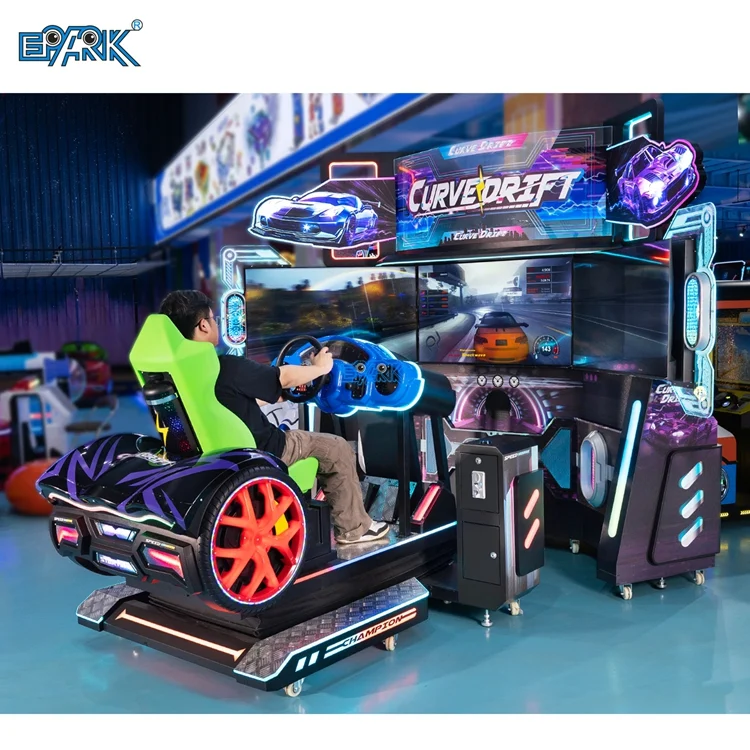
The physical cockpit of an arcade racing simulator—specifically the heavy-duty steering wheel mechanism and the precision accelerator and brake pedals—endures the absolute highest level of mechanical stress and physical handling in any indoor entertainment venue. Over months of intense gameplay, internal force feedback motors can gradually lose their holding torque, while high-precision potentiometers or optical encoders situated inside the steering column may drift out of calibration or accumulate dust and debris, resulting in sluggish, stiff, or erratic steering behavior. Performing a software-level recalibration of the axis settings via the built-in operator service menu frequently resolves minor tracking anomalies without requiring physical disassembly. For mechanical slipping or tactile resistance failure, a thorough, hands-on inspection of internal drive belts, metal gear teeth, tensioners, and mounting brackets becomes essential. Replacing worn potentiometers or degraded belt assemblies with high-grade, commercial-spec replacement parts ensures players once again experience the precise, robust, and immersive resistance expected from professional-grade racing simulators, thereby keeping player retention exceptionally high and driving repeat customer visits across all demographics.
Resolving Software Glitches and Multi-Player Network Lags
Modern arcade racing games have evolved far beyond simple plug-and-play electronics, relying heavily on complex operating systems, proprietary game software, encrypted security modules, and stable local area network connections to facilitate head-to-head multiplayer racing battles. Software freezes, endless boot loops, missing texture errors, and synchronization dropouts are frequently caused by corrupted system files, outdated firmware versions, or failing solid-state storage drives. Facility managers should establish a rigorous routine of backing up game data, maintaining clean interior ventilation paths to prevent the overheating of high-performance central and graphics processing units, and inspecting dedicated network switches whenever linked-cabinet racing modes fail to sync properly. Promptly applying official software patches and keeping system caches clear effectively prevents recurring software corruption, eliminating frustrating glitches and ensuring a seamless, lightning-fast competitive racing experience for every visitor walking through your doors.
Ensuring Operational Success Through Expert Engineering and Manufacturing Excellence
While possessing advanced troubleshooting and diagnostic skills is undeniably invaluable for day-to-day arcade management, the single most effective strategy to minimize long-term maintenance overhead is to invest in robust, expertly engineered hardware right from the very beginning. Inferior internal wiring, substandard feedback motors, uncertified power supplies, and poorly constructed cabinetry are the primary culprits behind recurring arcade malfunctions that drain operator profits and frustrate loyal customers. This is precisely where partnering with an established, globally trusted industry leader makes a profound commercial difference. EPARK stands as a premier, globally recognized arcade machine manufacturer with over a decade and a half of world-class production expertise, engineering high-performance racing game machines specifically tailored for heavy commercial durability, vibrant player engagement, and maximum uptime. By leveraging advanced factory-direct supply chains, rigorous quality control protocols, and comprehensive after-sales technical support, EPARK empowers amusement park owners, FEC operators, and global distributors to maintain exceptional equipment reliability, safeguard their initial capital investment, and deliver captivating entertainment experiences worldwide. Furthermore, comprehensive one-stop project solutions, free layout designs, and dedicated customer support ensure seamless venue setup from concept to grand opening, laying a solid foundation for sustained business success and long-term profitability.
Table of Contents
- Navigating the World of Arcade Racer Maintenance and Long-Term Reliability
- Uncovering the Roots of Power and Display Disruptions
- Restoring Steering Force Feedback and Pedal Precision
- Resolving Software Glitches and Multi-Player Network Lags
- Ensuring Operational Success Through Expert Engineering and Manufacturing Excellence