
 EN
EN


Why Air Hockey Is a Strategic Revenue Driver for High-Traffic Arcades
Growth of arcades and FECs as primary deployment sites for commercial air hockey
Air hockey tables have become a major money maker for Family Entertainment Centers and traditional arcades alike. The latest IAAPA report from 2025 shows that arcade games sit right up there in the top three revenue streams for these places, bringing in somewhere between 30 to maybe even 50 percent of all the money they make. What makes air hockey so special? It fits well in limited spaces, doesn't cost much to run day to day, and keeps players coming back fast one after another. That's exactly what busy venues need when trying to handle large crowds. Looking at the numbers, businesses that include air hockey tend to get around 15-25% better returns per square foot compared to similar spots that don't offer those kinds of table games.
Consumer demand drivers: social play, short-session engagement, and cross-demographic appeal
Air hockey’s profitability stems from three interlocking consumer behaviors:
- Social play dynamics: 78% of groups engage collaboratively or competitively, extending session duration and increasing repeat plays
- Short-session monetization: With average game lengths of 2–3 minutes, tables support 20+ rotations per hour during peak periods
- Cross-generational reach: The game draws equal participation from teens (42% of players) and families (38% of users), broadening its appeal beyond traditional gaming demographics
This versatility drives consistent dwell time—FECs report 30% longer average visitor stays in zones featuring air hockey—while the minimal learning curve encourages impulse plays, creating stable, scalable revenue.
Three Proven Air Hockey Cooperation Models for B2B Partnerships
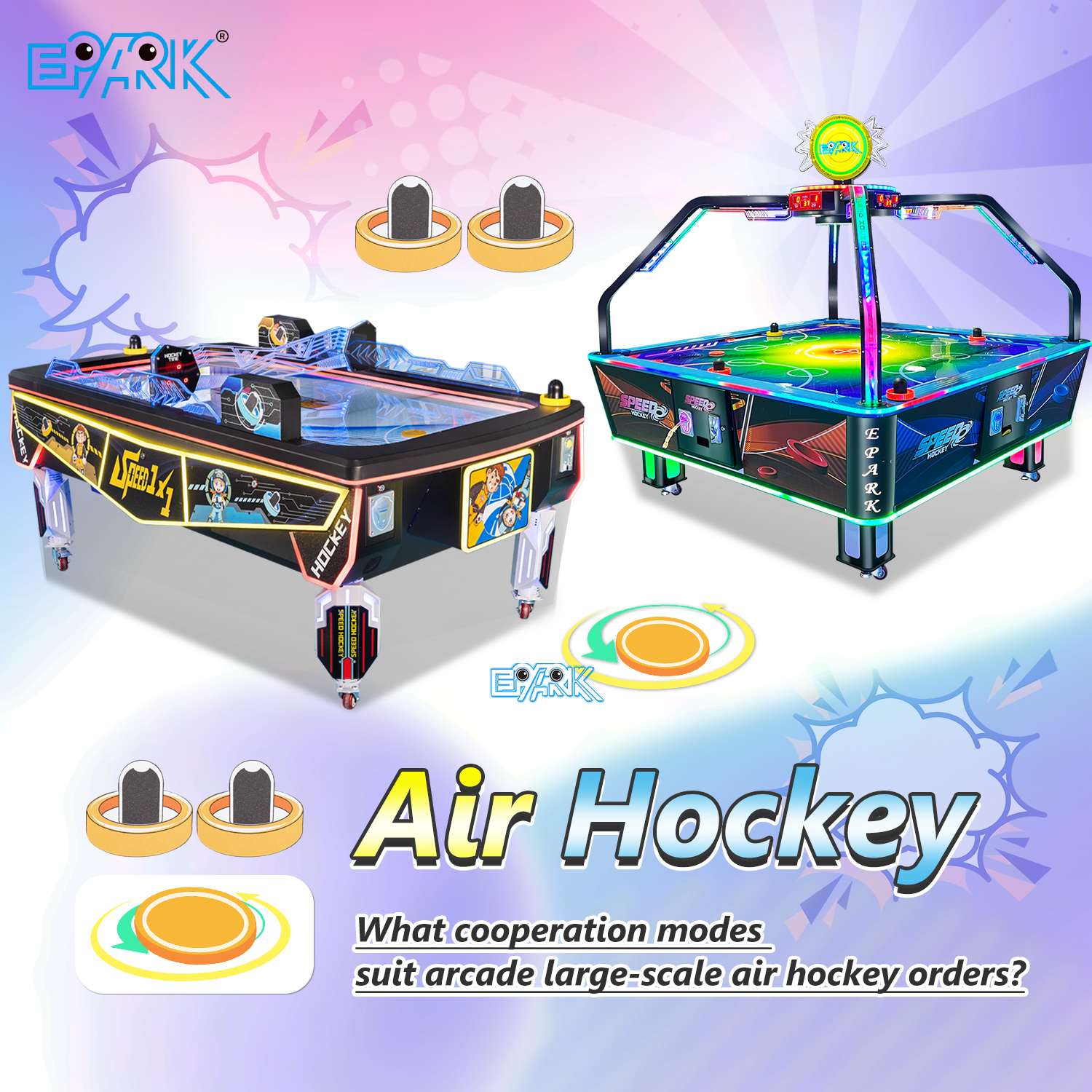
For arcade operators seeking large-scale air hockey deployments, three strategic partnership frameworks balance risk mitigation, scalability, and long-term ROI. Each model aligns incentives between venue owners and suppliers to maximize table utilization, uptime, and brand integration.
Revenue-sharing partnerships: aligning operator and supplier incentives
The performance based model takes away the need for big initial investments from operators right off the bat. What happens here is suppliers get around 15 to maybe 30 percent of what comes in from each game played. This setup means both sides have skin in the game when it comes to how well tables perform, where they're placed throughout the venue, and how much marketing gets done. For operators running the show, this creates budgets that are easier to plan for without worrying about broken machines eating into profits. Suppliers meanwhile end up with steady income streams tied directly to actual usage rather than just selling hardware. This approach works really well at places that experience those ups and downs through different seasons or smaller businesses that simply don't have the cash flow to spend on expensive equipment purchases upfront.
Lease-to-own programs with scalable deployment and maintenance support
With hybrid financing options, businesses can get their tables deployed right away without having to fork out big bucks upfront. After about two to three years, this arrangement typically converts into actual equity ownership. What makes these financing packages attractive is that they come with extra perks too. Companies receive priority tech support when needed, regular preventive maintenance checks, plus access to online dashboards showing how each unit performs financially in real time. Plus, because the system is built in modules, organizations can expand gradually across different locations while still operating under one comprehensive service contract. This approach works especially well for chains or franchises looking to scale operations without getting bogged down by complicated logistics.
Bulk OEM/private-label orders for branded air hockey table rollouts
National and regional chain operators find that private label options let them maintain complete brand identity while still getting durable products that last. When ordering more than 15 units, businesses get access to volume pricing that ranges from 20% to 40% off, plus we handle all the shipping logistics for them. Our standard anti-vandalism package includes things like tough polymer coatings on surfaces, tempered steel side rails, and those special screws that regular folks can't just unscrew. For larger orders, we include IoT modules and remote diagnostic tools right out of the box. These smart features help predict when something might break before it actually does, which means fewer unexpected shutdowns and happier customers overall.
Key Selection Criteria for Commercial Air Hockey Tables in Arcade Environments
Durability, anti-vandalism engineering, and low-downtime service design
Air hockey tables used in commercial settings need to handle at least 14 hours of play each day, often in places where they get constant action. The best ones come with tough polymer surfaces that stand up to regular use, plus side rails made from either tempered glass or steel for durability. They also include special hardware designed to prevent tampering and vandalism. Many modern tables now have modular motors and access panels that don't require tools for replacement. This means technicians can swap out parts in around 12 minutes flat, which cuts down on repair time by roughly 35% compared to older models. According to industry reports from last year, these design improvements actually cut downtime across arcades nationwide by about the same percentage. That translates to keeping hundreds of dollars per hour in revenue from slipping away when machines are out of commission.
Smart features: IoT integration for usage analytics, dynamic pricing, and remote diagnostics
Smart tables equipped with IoT technology turn what was once just equipment into revenue generators. The built-in sensors track how people actually use them - when they're busy on weekends versus slow during weekdays, how long sessions last, and how many players typically gather around at once. This real world data helps operators make smarter business choices, from adjusting prices based on demand (like charging extra on Saturdays or offering deals midweek) to moving tables where they'll get the most action. When it comes to maintenance, these systems can spot potential motor problems ahead of time with pretty good accuracy around 89%, so technicians can fix issues before anything breaks down completely. Venues across the country have seen results too, with some reporting as much as a 40% drop in unexpected repair visits while their tables stay operational longer and generate better returns overall.
FAQs
Why is air hockey a good investment for arcades?
Air hockey is space-efficient, cost-effective, and generates quick player turnovers, leading to high revenue potential.
What are the main consumer appeal factors of air hockey?
Air hockey attracts players due to its social play dynamics, short-session format, and broad demographic reach.
What are some partnership models for deploying air hockey?
Popular models include revenue-sharing, lease-to-own programs, and bulk OEM/private-label orders.
What makes a commercial air hockey table durable?
Durability features include tough polymer coatings, tempered steel rails, and anti-vandalism hardware.
How do IoT features improve air hockey table operations?
IoT integration allows for usage analytics, dynamic pricing, and remote diagnostics, optimizing maintenance and profits.