
 EN


Introduction
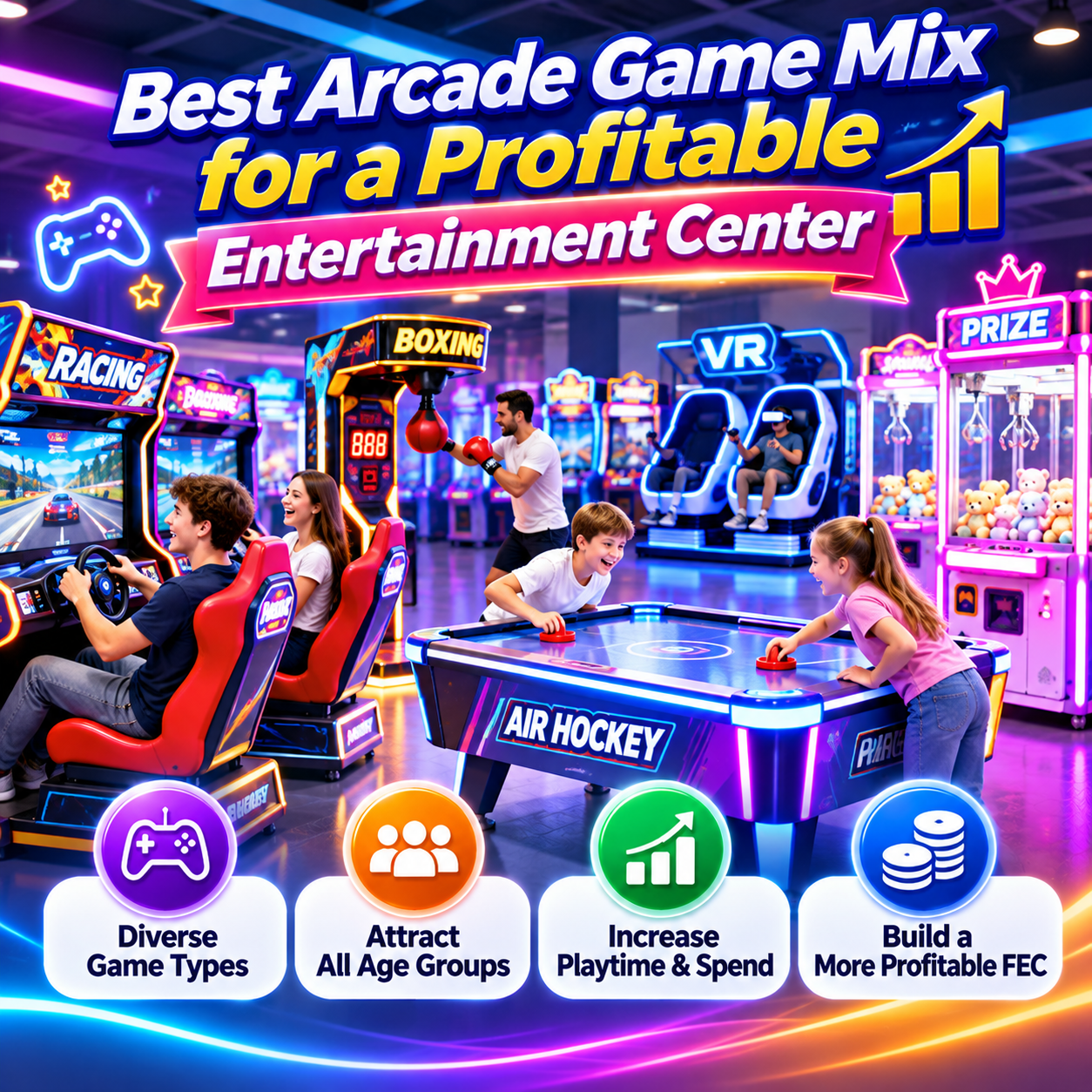
Opening a successful arcade business involves more than purchasing the latest commercial arcade machines. One of the most important decisions for family entertainment center (FEC) operators is selecting the right combination of game categories.
A venue filled entirely with racing arcade machines may attract competitive players but offer limited entertainment options for families with young children. Similarly, an arcade focused only on claw machines may miss opportunities to serve customers interested in sports games, multiplayer attractions, or interactive entertainment.
A balanced arcade game mix can help operators attract different customer groups, encourage participation across multiple attractions, and create more opportunities for paid gameplay.
For arcade investors, amusement equipment distributors, and shopping mall entertainment operators, the goal is to choose equipment that matches customer demand while supporting sustainable operating costs.
This guide explains how to develop a commercial arcade equipment mix and evaluate the role of different game categories in an entertainment center.
What Is an Arcade Game Mix?
An arcade game mix refers to the combination of commercial gaming equipment installed within an entertainment venue.
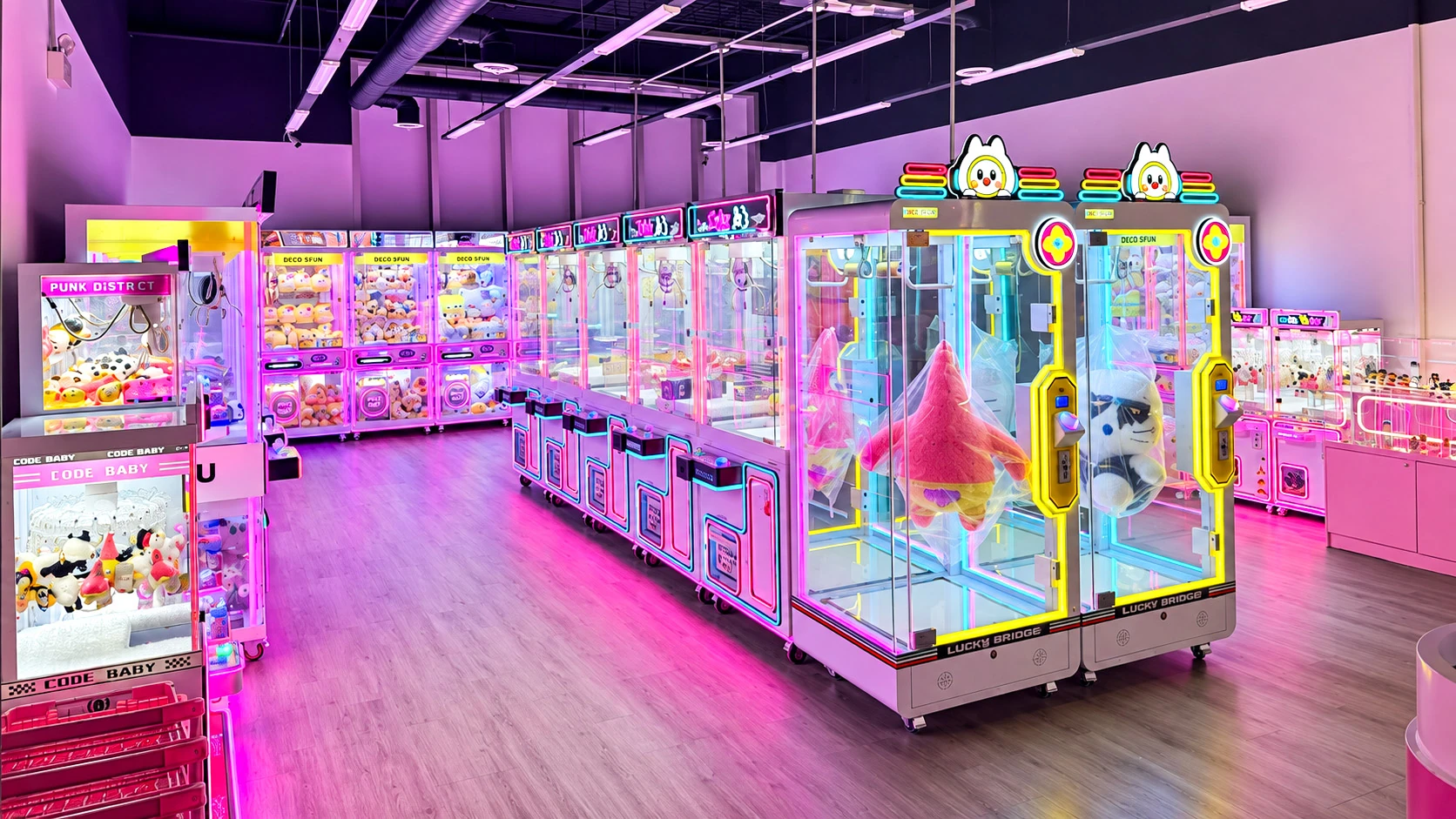
It may include coin operated arcade machines, prize games, racing simulators, sports arcade equipment, redemption games, and VR entertainment attractions.
The ideal combination depends on the venue's business model.
A family entertainment center may require a broad selection of activities, while a dedicated claw machine store may concentrate on prize-based entertainment.
A gaming arcade targeting teenagers may place greater emphasis on competitive games and immersive experiences.
Rather than following one fixed equipment formula, operators should build their arcade game mix around customer demand, available space, and investment objectives.
Understand the Commercial Role of Different Arcade Machines
Different arcade game categories contribute to the business in different ways.
Some machines attract attention through large displays and distinctive designs. Others offer short gameplay sessions, multiplayer participation, or prize-related experiences.
Understanding these differences can help operators create a balanced entertainment offering.
Racing Arcade Machines for Competitive Entertainment
Commercial racing arcade machines provide interactive driving experiences through steering wheels, pedals, large displays, and selected motion features.
Multiplayer racing games can encourage competition between friends and family members.
For FEC operators, racing machines may serve as visually prominent attractions, particularly in venues targeting teenagers and adults.
However, large racing simulators require careful consideration of floor space, power consumption, and maintenance access.
Claw Machines for Prize-Based Gameplay
Commercial claw machines are commonly installed in shopping malls, amusement centers, and dedicated prize stores.
Their transparent cabinets and visible merchandise make them suitable for prize-focused entertainment areas.
Claw machine operators should consider prize costs, cabinet size, payment configuration, and customer preferences.
A selection of different prize themes may help create variety without requiring completely different gameplay systems.
Redemption Game Machines for Repeat Participation
Redemption arcade machines provide gameplay experiences that may award tickets or points.
These games can be attractive to customers who enjoy collecting rewards and participating in skill-based challenges.
For operators, redemption equipment requires additional planning for prize inventory, ticket systems, and reward costs.
A well-managed redemption area can complement other arcade machine categories and provide customers with different entertainment choices.
Sports Arcade Machines for Physical Interaction
Basketball arcade machines, boxing machines, and air hockey tables offer recognizable gameplay and competitive experiences.
These attractions may appeal to customers who enjoy physical interaction and friendly challenges.
Sports arcade equipment can also provide entertainment options for groups.
Operators should consider player movement, equipment dimensions, and suitable installation clearances.
VR Arcade Equipment for Immersive Experiences
Commercial VR machines provide immersive entertainment experiences through virtual environments and interactive effects.
Depending on the equipment, VR attractions may require additional supervision, operating space, and technical maintenance.
For entertainment investors, VR equipment should be evaluated according to local demand, operating costs, and the intended customer experience.
Match Your Arcade Game Mix With Your Target Audience
Customer demographics are a major factor in equipment selection.
Different age groups and visitor types may have different entertainment preferences.
Family Entertainment Centers
Family-focused venues often benefit from a combination of age-appropriate attractions, prize games, redemption machines, and multiplayer entertainment.
The objective is to provide activities that allow different family members to participate.
Teenager and Young Adult Arcades
Gaming venues targeting teenagers and young adults may prioritize racing simulators, shooting arcade machines, competitive sports games, and interactive attractions.
These categories can provide more challenging gameplay and opportunities for social participation.
Shopping Mall Entertainment Areas
Shopping mall arcades may serve customers who visit for shorter entertainment sessions.
Compact prize machines, selected redemption games, and recognizable arcade attractions can be considered according to available space and customer traffic.
Mixed-Audience Entertainment Centers
For venues serving a broad customer base, equipment diversity becomes particularly important.
Operators should balance different gameplay styles while avoiding unnecessary duplication of similar machines.
Build a Balanced Arcade Equipment Selection
A balanced arcade game mix should include attractions with different gameplay experiences.
For example, an FEC may combine competitive racing games, prize machines, sports games, and redemption equipment.
This allows customers to move between different types of entertainment rather than repeating the same activity.
However, there is no universal percentage that every venue should allocate to each game category.
The appropriate combination depends on customer demand, machine dimensions, and operating costs.
The following table summarizes the commercial role of different equipment categories.
| Arcade Game Category | Main Entertainment Experience | Planning Considerations |
|---|---|---|
| Racing Arcade Machines | Competitive driving gameplay | Space, player capacity, maintenance |
| Claw Machines | Prize-based entertainment | Prize costs, visibility, payment |
| Redemption Games | Ticket or point rewards | Reward inventory, game settings |
| Basketball Machines | Physical skill and competition | Playing clearance, scoring systems |
| Air Hockey Tables | Multiplayer competition | Table dimensions, circulation |
| VR Arcade Equipment | Immersive interactive experiences | Supervision, technical requirements |
This table provides a planning reference rather than a guaranteed revenue ranking.
Consider Revenue Potential and Operating Costs
Commercial arcade machines should be evaluated according to both customer appeal and operating expenses.
A machine that attracts attention may not necessarily generate the highest net contribution.
For example, a large racing simulator may require more floor space and electricity than a compact prize machine.
A redemption machine may generate frequent gameplay but also involve ongoing prize expenses.
Operators should compare purchase costs, expected usage, maintenance requirements, and other direct operating expenses.
Evaluate Revenue per Square Meter
For venues with limited floor space, revenue per square meter can provide useful information.
A simplified calculation is:
Revenue per Square Meter = Machine Revenue ÷ Allocated Floor Area
For example, if a machine generates $1,000 during a month and occupies an allocated operating area of 10 square meters, its monthly revenue density is $100 per square meter.
This figure does not represent profit and should be evaluated alongside operating costs and customer experience.
Avoid Relying on Fixed Payback Promises
Equipment profitability depends on local demand, pricing, operating hours, and business expenses.
Investors should use realistic financial assumptions rather than assuming that every arcade machine will recover its cost within a fixed period.
Use Multiplayer Games to Encourage Group Participation
Multiplayer entertainment can be an important part of an arcade game mix.
Games that allow friends or family members to participate together may create additional social interaction.
Examples include two-player racing arcade machines, four-player air hockey tables, and selected multiplayer shooting games.
These attractions may also attract spectators, increasing visibility within the venue.
However, operators should ensure that player and spectator areas do not interfere with customer circulation.
The number of multiplayer machines should reflect actual demand and available space.
Avoid Purchasing Too Many Similar Machines
Buying several machines with similar gameplay can sometimes limit entertainment variety.
For example, installing many racing games without other attractions may create a narrow entertainment offering.
However, duplication can be appropriate when a particular category consistently attracts strong demand.
A dedicated racing arcade or claw machine store may intentionally focus on one equipment category.
The key is to understand the business concept.
For general FEC projects, operators should review whether each additional machine provides a meaningful benefit to the overall entertainment selection.
Consider Equipment Maintenance and Spare Parts
Maintenance requirements vary across arcade machine categories.
Racing simulators may include steering systems, pedals, and motion mechanisms.
Claw machines use motors, sensors, and gripping assemblies.
Redemption machines may contain ticket dispensers and additional mechanical components.
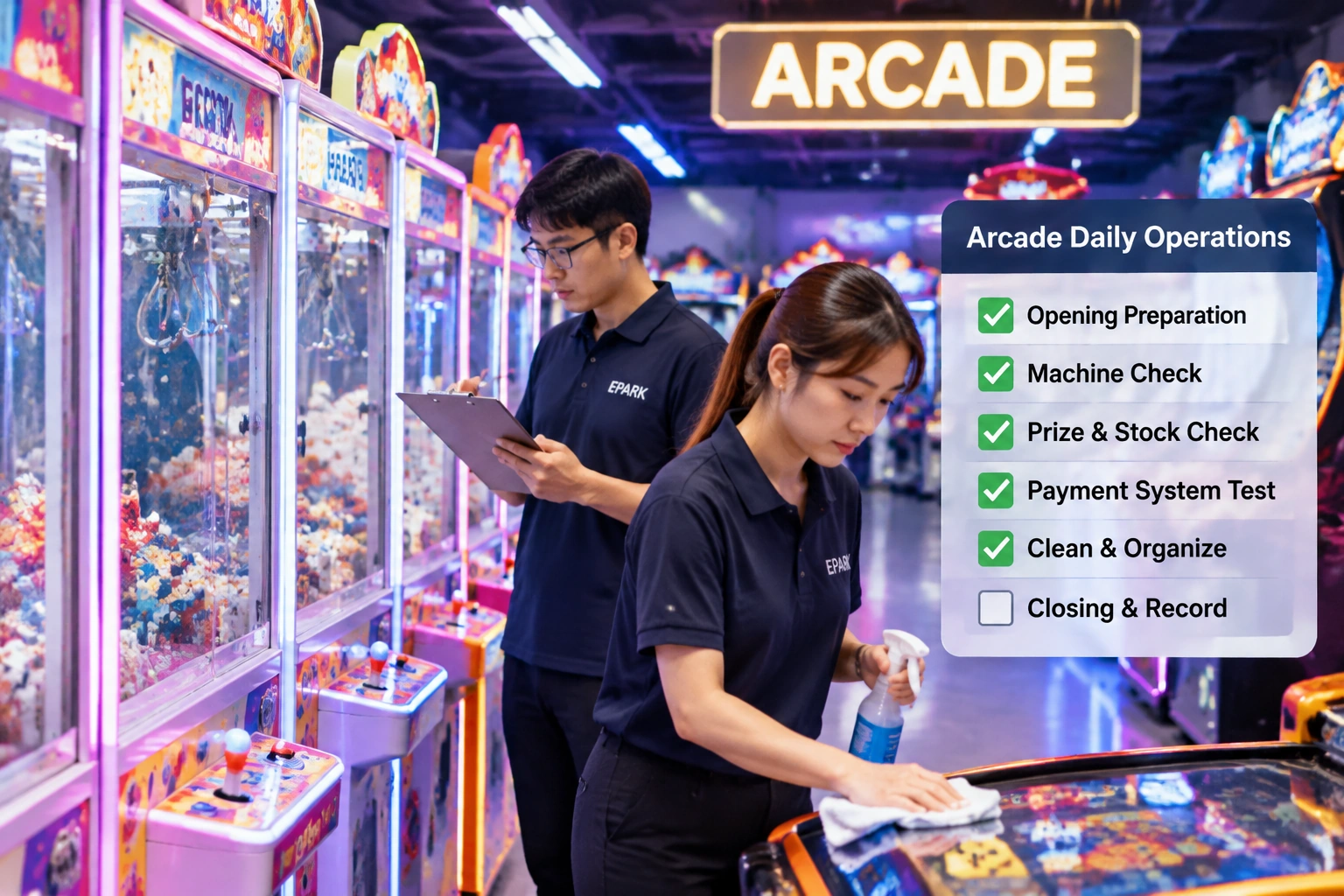
When planning an arcade equipment mix, consider whether staff can manage the maintenance requirements of the selected machines.
It is also useful to discuss spare parts availability and technical support with the manufacturer.
A diversified game selection should remain manageable from an operational perspective.
Plan Equipment Purchases According to Your Budget
Investment budget influences which arcade machine categories can be included in a project.
Rather than allocating the entire budget to the most expensive attractions, operators should consider a combination of equipment with different purchase costs and operating requirements.
A smaller arcade may begin with compact machines and selected interactive attractions.
A larger family entertainment center may include racing simulators, sports games, redemption machines, and VR equipment.
The final selection should also account for shipping, installation, payment systems, and ongoing operating expenses.
For investors with limited budgets, phased equipment purchasing may provide additional flexibility.
Update Your Arcade Game Mix Based on Customer Demand
Customer preferences can change over time.
An arcade game mix that performs well during the opening period may require adjustments as the business develops.
Operators should review machine revenue, play counts, customer feedback, and maintenance records.
If a particular game category consistently attracts strong demand, adding complementary equipment may be worth considering.
If another category receives limited use, investigate whether placement, pricing, or gameplay appeal could be improved.
Replacing machines should be based on a broader performance review rather than short-term trends alone.
Choose an Arcade Machine Manufacturer With Multiple Product Categories
For entertainment investors purchasing several types of equipment, working with a manufacturer that offers a broad product portfolio can simplify project coordination.
A professional commercial arcade machine manufacturer should provide accurate product specifications, available customization options, and suitable installation information.
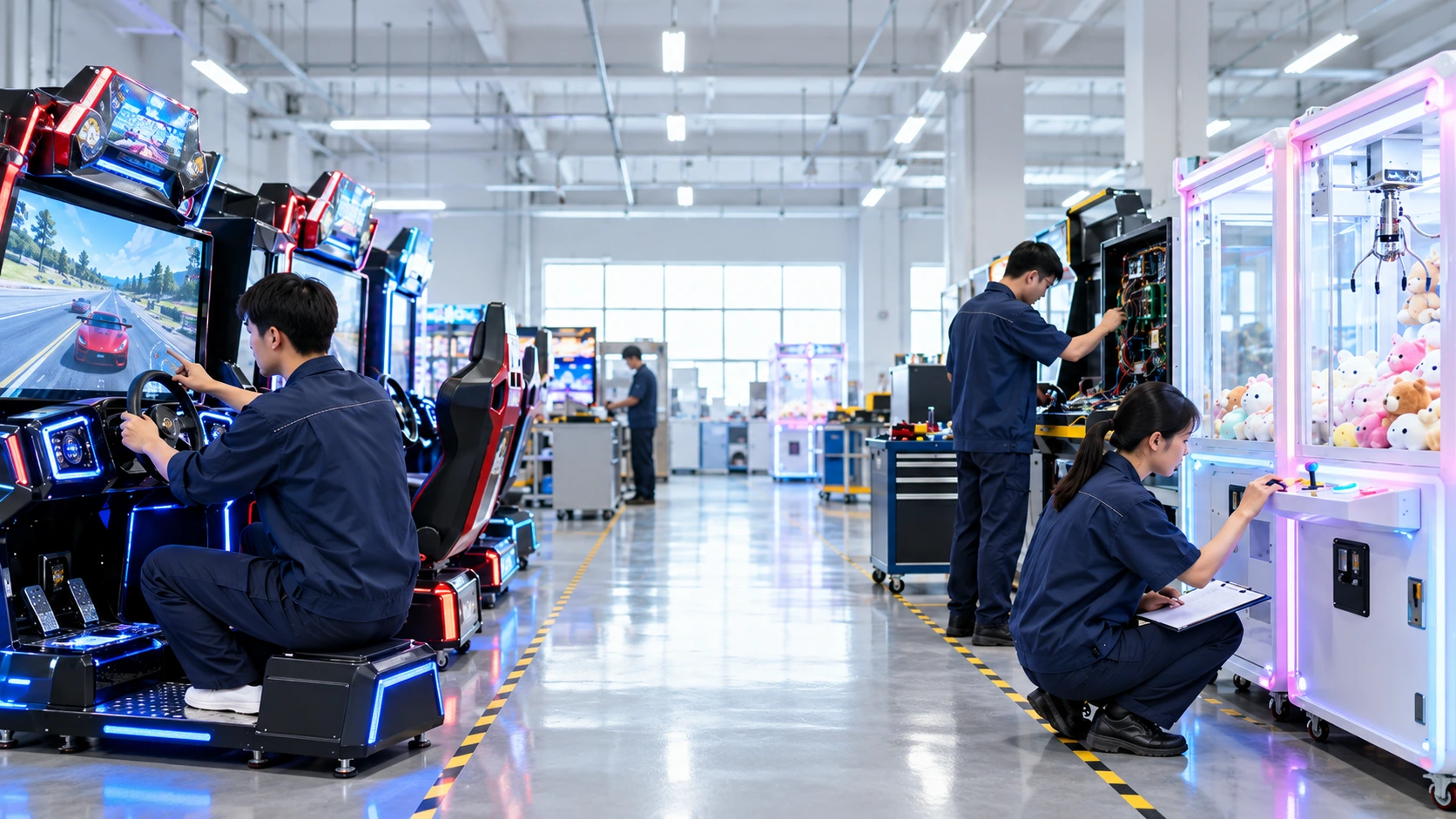
EPARK is a factory-direct amusement equipment manufacturer based in Guangzhou, China, with over 14 years of industry experience.
Our 25,000-square-meter manufacturing facility and 3,000-square-meter showroom support a wide range of commercial entertainment equipment.
EPARK supplies racing arcade machines, claw machines, redemption games, basketball machines, boxing machines, shooting games, air hockey tables, VR attractions, kiddie rides, and indoor playground equipment.
For international distributors, FEC operators, and entertainment investors, EPARK provides equipment selection assistance, customized venue planning, manufacturing, quality inspection, and after-sales support.
Our team can help buyers review arcade equipment combinations based on available space, customer demographics, and purchasing budgets.
Explore commercial arcade machines and one-stop entertainment solutions at EPARK Game Machine Factory.
Frequently Asked Questions
What Is the Best Arcade Game Mix for a Family Entertainment Center?
A balanced FEC game mix may include racing arcade machines, claw machines, redemption games, sports equipment, and age-appropriate interactive attractions.
The final selection should reflect customer preferences, available space, and operating costs.
Should a Small Arcade Focus on One Game Category?
A specialized arcade can focus on one category when local demand supports that business model.
However, a general entertainment venue may benefit from several gameplay experiences to attract different customers.
How Can Arcade Owners Improve Their Game Mix?
Operators should review machine revenue, customer feedback, equipment utilization, and maintenance costs.
These records can help identify which game categories deserve additional investment and which may need adjustment.
Can an Arcade Equipment Manufacturer Help Plan the Game Mix?
Yes. Manufacturers offering multiple equipment categories may provide product recommendations and venue planning assistance.
Buyers should share their floor plan, budget, target customers, and operating requirements to receive more relevant suggestions.
Conclusion
Selecting the right arcade game mix is an important part of building a successful commercial entertainment business.
Rather than focusing only on individual machine popularity, operators should evaluate how different attractions work together to serve customers and support business objectives.
Racing games, claw machines, redemption equipment, sports arcade machines, and VR attractions each offer different entertainment experiences and operating requirements.
For FEC owners, arcade distributors, and entertainment investors, a balanced equipment selection can help create more opportunities for customer participation while supporting efficient use of space and investment resources.
Planning a new arcade or upgrading your existing entertainment center?
Visit EPARK Game Machine Factory to explore commercial arcade machines, amusement equipment, and one-stop FEC solutions.
Contact EPARK with your venue size, investment budget, and target customer groups to request suitable arcade equipment recommendations.
Table of Contents
- Introduction
- What Is an Arcade Game Mix?
- Understand the Commercial Role of Different Arcade Machines
- Match Your Arcade Game Mix With Your Target Audience
- Build a Balanced Arcade Equipment Selection
- Consider Revenue Potential and Operating Costs
- Use Multiplayer Games to Encourage Group Participation
- Avoid Purchasing Too Many Similar Machines
- Consider Equipment Maintenance and Spare Parts
- Plan Equipment Purchases According to Your Budget
- Update Your Arcade Game Mix Based on Customer Demand
- Choose an Arcade Machine Manufacturer With Multiple Product Categories
- Frequently Asked Questions
- Conclusion