
 EN


Introduction
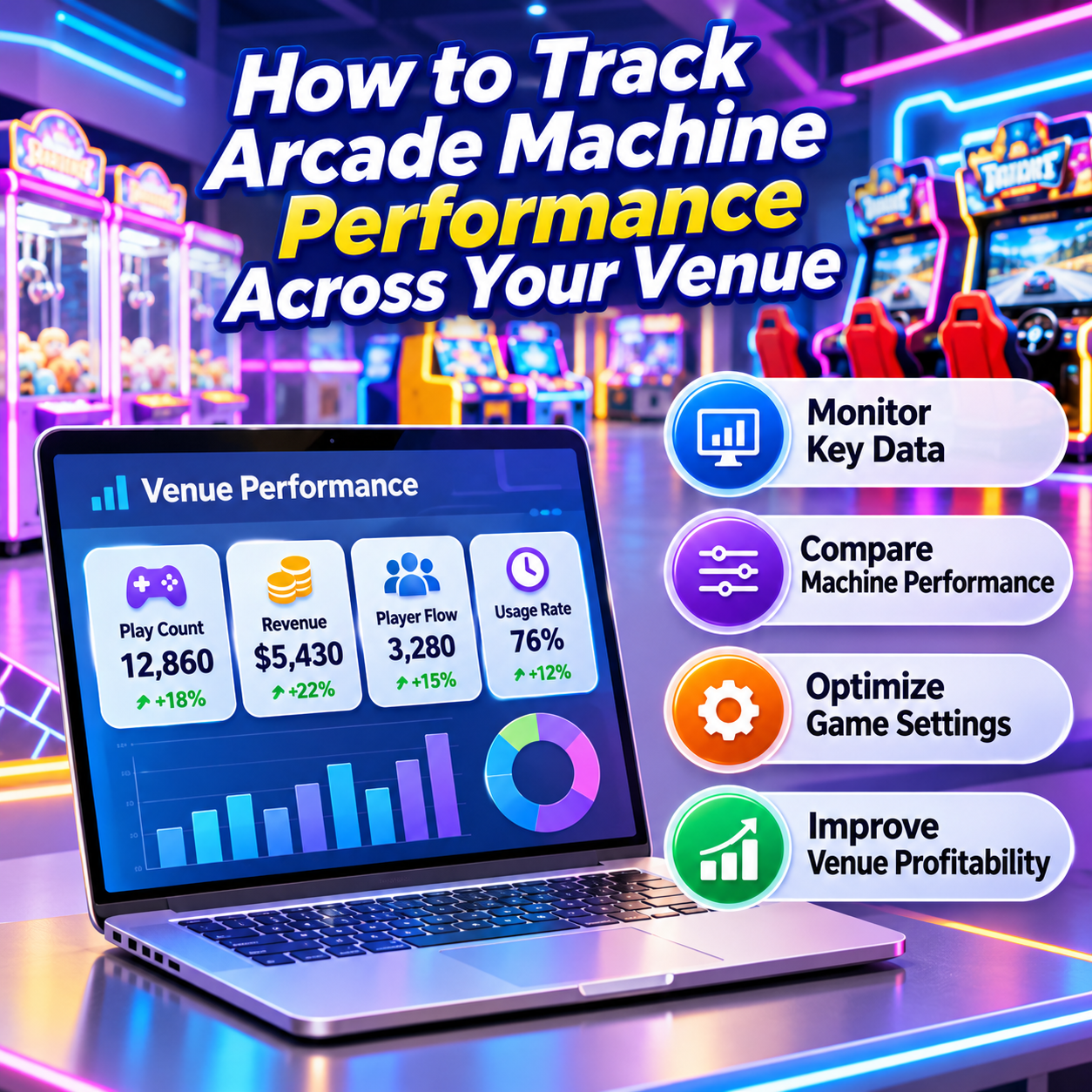
Running a profitable arcade or family entertainment center (FEC) requires more than purchasing popular commercial arcade machines. Operators also need to understand how individual machines perform after installation.
A busy arcade may contain racing simulators, claw machines, redemption games, basketball machines, and other entertainment equipment. However, not every machine contributes equally to the venue's revenue or customer experience.
Some machines generate consistent income throughout the week, while others attract attention mainly during weekends or special events. Certain attractions may receive frequent use but also require higher maintenance expenses.
By tracking arcade machine performance, operators can make more informed decisions about equipment placement, pricing, maintenance, and future investments.
This guide explains the key performance indicators arcade owners should monitor and how to use operational data to improve business efficiency.
Why Arcade Machine Performance Tracking Matters
Arcade machine performance tracking helps operators understand how equipment contributes to overall business operations.
Without reliable data, purchasing decisions may depend too heavily on visual impressions or assumptions about customer preferences.
For example, a large racing machine may appear popular because customers frequently gather around it. However, its actual revenue and operating costs may tell a different story.
Similarly, a compact claw machine may attract less attention but generate steady daily transactions.
Tracking performance provides a clearer picture of how different attractions contribute to the venue.
It also helps operators identify underperforming equipment, plan maintenance, and evaluate potential upgrades.
Monitor Revenue Generated by Each Arcade Machine
Machine-level revenue is one of the most useful indicators for commercial arcade operators.
It shows how much money each attraction generates during a particular period.
Depending on the payment system, revenue information may be available through machine counters, cash collection records, or centralized management software.
Operators should record revenue consistently and compare results over similar periods.
For example, a machine's weekend revenue should not automatically be compared with another machine's weekday performance without considering customer traffic.
Revenue tracking is particularly useful when evaluating different arcade game categories.
Compare Revenue Across Game Types
Racing machines, claw machines, and redemption games may have different pricing structures and usage patterns.
Comparing their revenue can help operators understand which categories contribute most to the business.
However, higher revenue does not necessarily mean higher profitability.
Equipment costs and operating expenses must also be considered.
Track Game Plays and Customer Participation
The number of games played provides additional insight into customer demand.
A machine may generate high revenue because of a higher price per session, while another machine may receive more frequent customer participation at a lower price.
Tracking play counts helps operators understand these differences.
For example, basketball machines may attract customers interested in short competitive games, while racing simulators may offer longer sessions.
Operators should review both play counts and revenue to understand machine performance.
Calculate Average Revenue Per Play
A useful metric is average revenue per paid play.
The basic formula is:
Average Revenue Per Play = Machine Revenue ÷ Paid Plays
For example, if a machine generates $600 from 300 paid plays, the average revenue per play is $2.
This calculation can help operators evaluate pricing consistency and promotional effects.
Free promotional plays and refunded transactions should be recorded separately where possible.
Measure Arcade Machine Utilization
Machine utilization indicates how frequently equipment is used during available operating time.
A machine with high utilization may experience strong customer demand, while one with low utilization may require further evaluation.
A simple time-based calculation is:
Machine Utilization Rate = Active Gameplay Time ÷ Available Operating Time × 100%
For example, if a machine is available for 10 hours and actively used for 4 hours, its utilization rate is 40%.
This metric is most useful when reliable gameplay duration data is available.
For machines without automated tracking, operators may estimate usage through structured observation or transaction records.
Interpret Utilization Carefully
High utilization does not automatically indicate that a machine should be replaced or duplicated.
Operators should consider session duration, customer waiting times, pricing, and equipment capacity.
A machine with moderate utilization may still be commercially valuable if it generates sufficient revenue relative to its costs.
Record Equipment Downtime
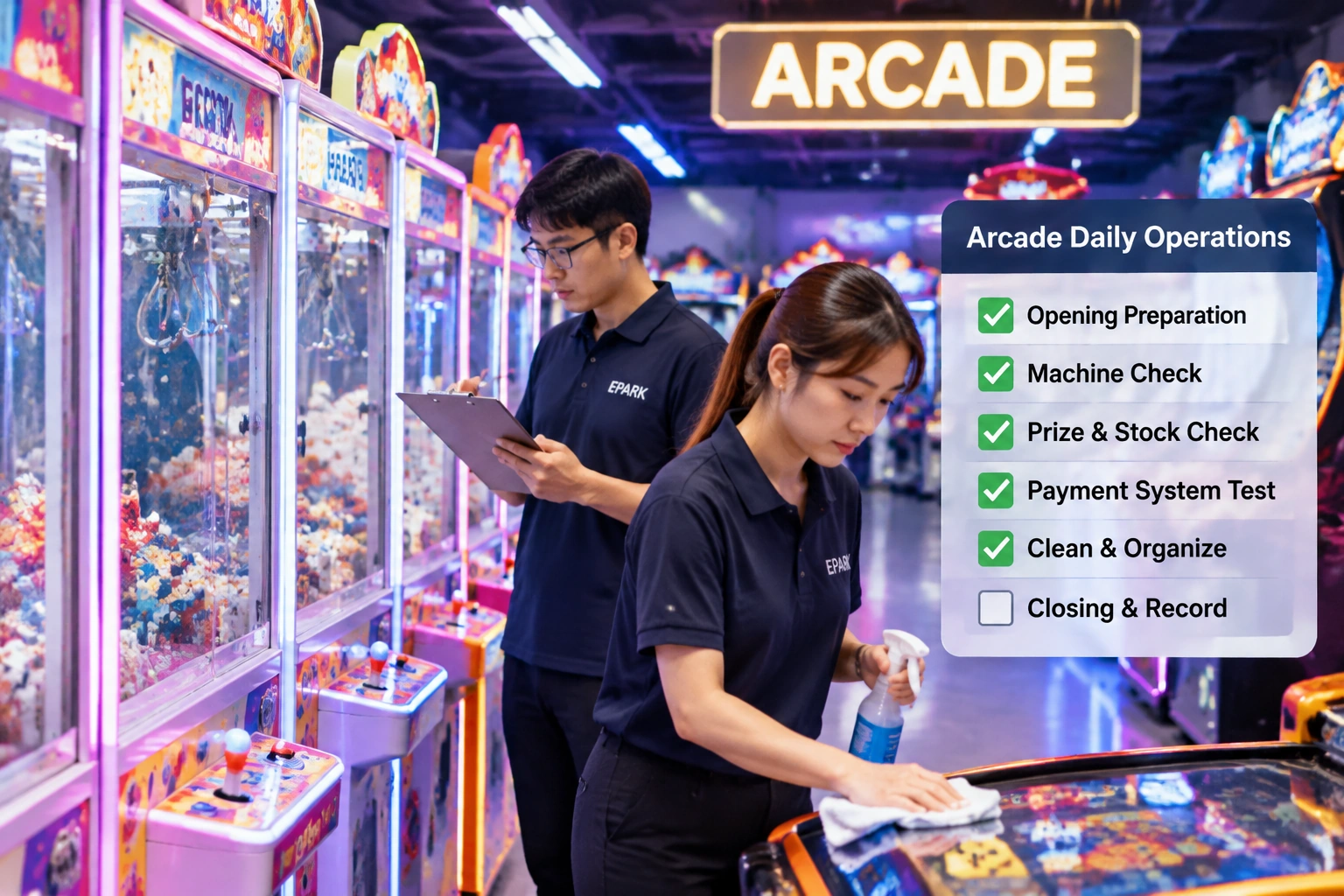
Downtime occurs when a machine is unavailable for normal customer use.
Common causes include mechanical faults, electrical problems, software errors, and payment system failures.
Tracking downtime helps operators understand how equipment reliability affects business performance.
Useful information includes the date of the fault, affected machine, duration of the interruption, and corrective action.
Calculate Machine Availability
Machine availability can be estimated using the following formula:
Availability Rate = Available Operating Time ÷ Scheduled Operating Time × 100%
For example, if a machine is scheduled to operate for 100 hours but remains unavailable for 5 hours, its availability rate is 95%.
Operators should use consistent definitions when recording planned maintenance and unexpected downtime.
Regular reviews can help identify machines that require repeated technical attention.
Evaluate Operating Costs and Maintenance Expenses
Revenue alone does not show the full financial contribution of an arcade machine.
Operators should also monitor direct expenses associated with each attraction.
These may include electricity, prize costs, replacement parts, maintenance labor, and payment processing fees.
For claw machines and redemption games, prize-related expenses can be particularly important.
For motion-based racing equipment, maintenance and power requirements may be more significant.
A useful approach is to calculate machine-level contribution after identifiable direct operating costs.
However, this figure should not be confused with net profit because venue-wide expenses such as rent, management salaries, and insurance may not yet be included.
Compare Performance by Location and Gaming Zone
Machine placement can influence customer visibility and participation.
Two similar machines may perform differently because of their positions within the venue.
For example, a claw machine near a busy customer route may receive more attention than one located in a less visible corner.
Operators can compare revenue and play counts across different gaming zones.
If a machine consistently performs poorly, consider whether visibility, accessibility, or nearby attractions may be contributing factors.
Relocating equipment can be tested when practical, but results should be evaluated over comparable periods.
Identify Seasonal and Weekly Performance Patterns
Customer demand often changes throughout the week and year.
Weekends, public holidays, school vacations, and local events may influence arcade traffic.
Operators should review performance across different periods rather than relying on a single day's results.
For example, family-oriented attractions may experience different demand patterns from competitive racing games.
Understanding these variations can support staffing decisions, maintenance scheduling, and promotional planning.
It can also help operators avoid making equipment replacement decisions based on temporary changes in demand.
Use Performance Data to Improve Pricing
Machine performance reports can provide useful information when reviewing game prices.
If a machine receives strong demand but generates limited revenue, operators may consider whether its pricing structure is appropriate.
However, increasing prices without understanding customer expectations may reduce participation.
Similarly, reducing prices does not guarantee higher total revenue.
Pricing changes should be tested carefully, and operators should compare revenue, play counts, and customer responses before and after adjustments.
A measured approach helps avoid unnecessary changes based on incomplete information.
Decide When to Relocate, Upgrade, or Replace Equipment
Performance tracking becomes particularly valuable when making equipment investment decisions.
Operators may identify machines that generate limited revenue, experience frequent downtime, or no longer match customer preferences.
Before replacing equipment, review whether performance could improve through maintenance, relocation, pricing adjustments, or better customer communication.
If a machine continues to underperform, replacement may be appropriate.
For new purchases, compare equipment investment with expected demand and operating costs.
Avoid relying on guaranteed revenue or fixed payback claims, as actual results vary by market and venue.
Use Data When Planning New Arcade Equipment Purchases
Historical performance records can guide future equipment selection.
If multiplayer racing games consistently attract customers, operators may consider additional competitive attractions.
If prize machines generate steady participation, expanding the prize gaming area may be worth evaluating.
However, purchasing decisions should also account for available space, customer demographics, equipment costs, and local competition.
Data should support business judgment rather than replace it.
For distributors and investors developing multiple venues, consistent reporting can also help compare equipment categories across different locations.
How EPARK Supports Arcade Equipment Planning
Choosing suitable commercial arcade machines is an important part of long-term business development.
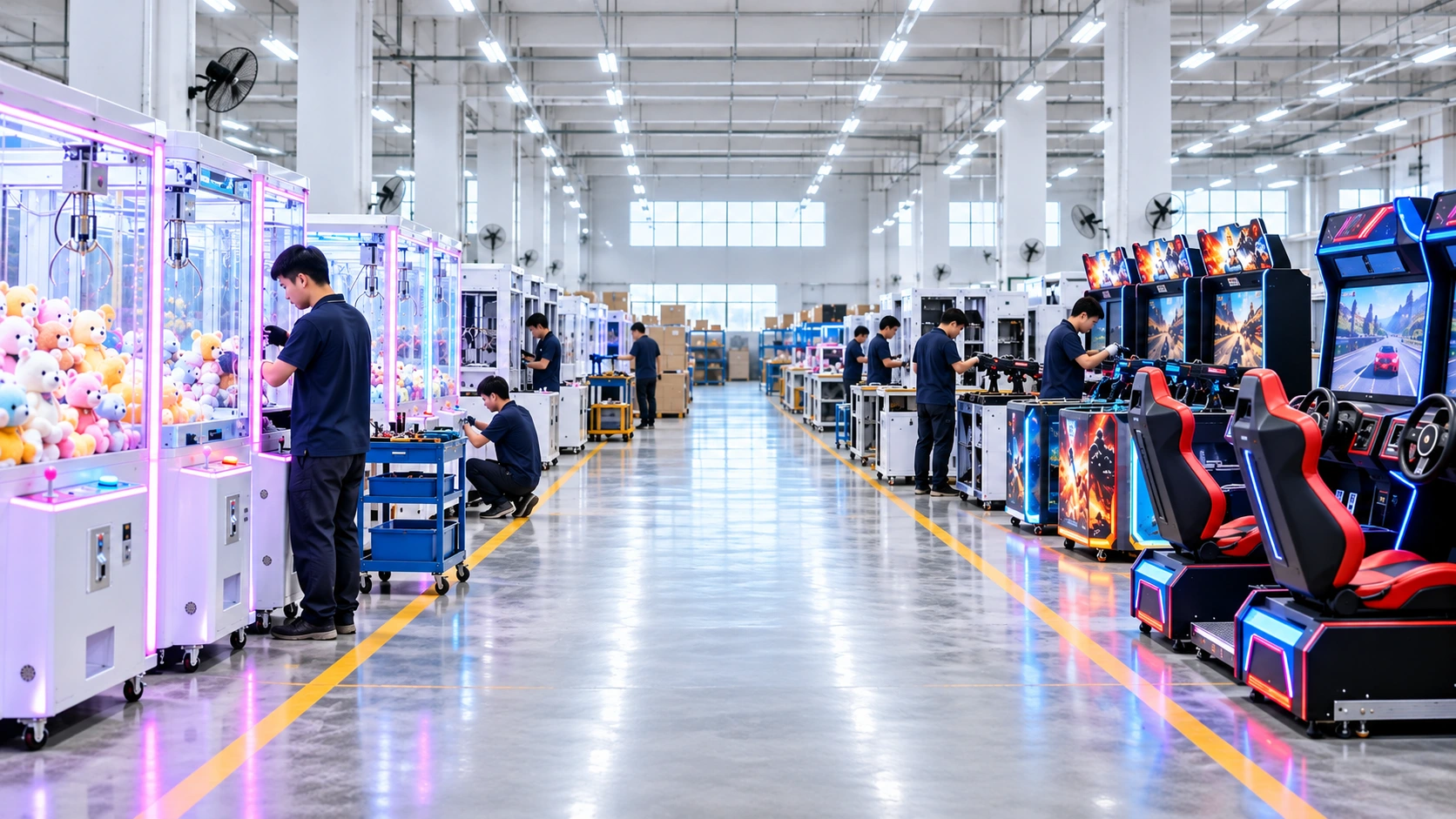
EPARK is a professional amusement equipment manufacturer based in Guangzhou, China, with over 14 years of industry experience.
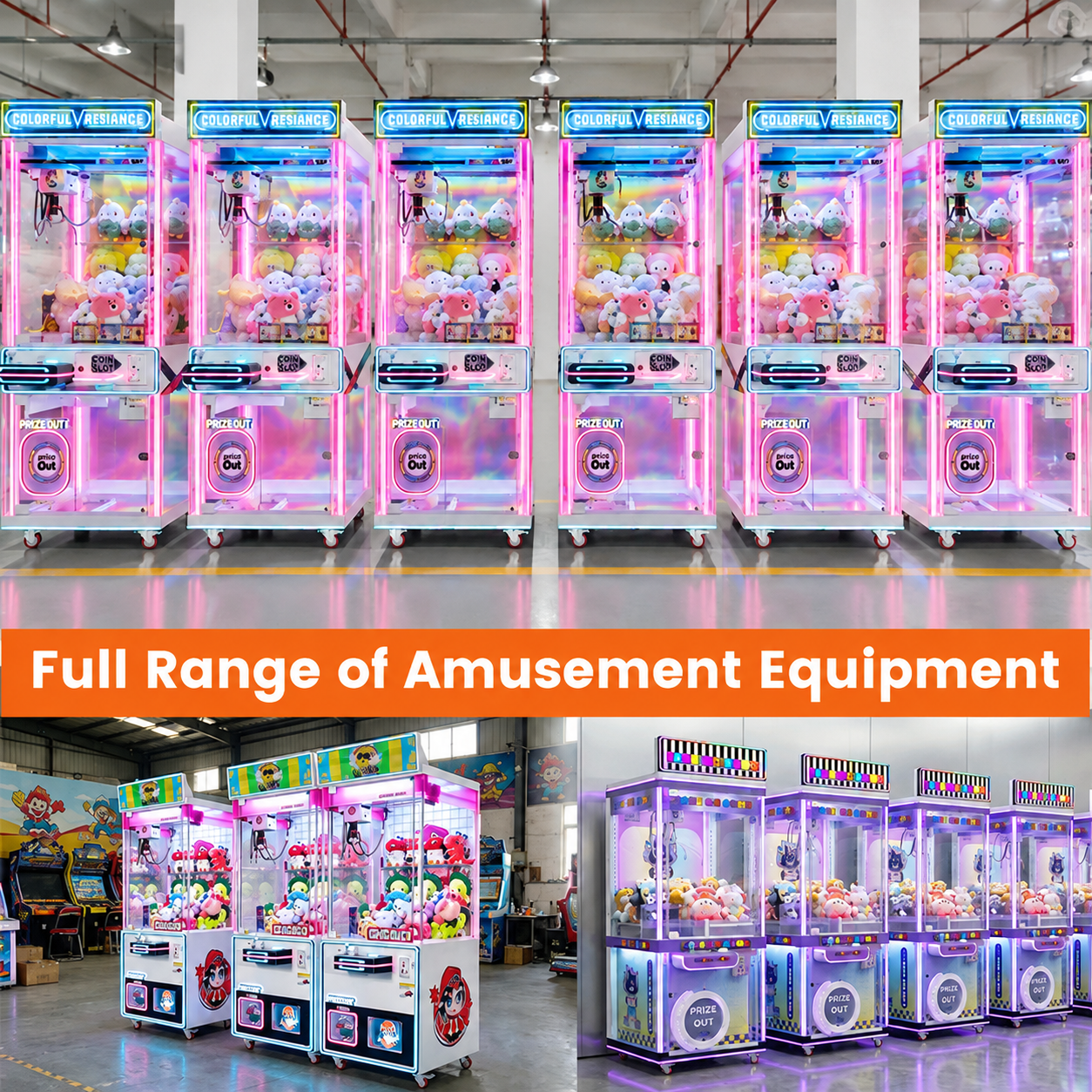
Our product portfolio includes claw machines, racing arcade machines, shooting games, redemption equipment, basketball machines, boxing machines, VR attractions, and other commercial amusement equipment.
EPARK supports international FEC operators, arcade owners, distributors, and entertainment investors with equipment selection, product customization, venue planning, manufacturing, quality inspection, and after-sales assistance.
For operators reviewing machine performance and planning new purchases, our team can help identify suitable equipment configurations based on venue size, target customers, and project requirements.
Explore commercial arcade machines and entertainment solutions at EPARK Game Machine Factory.
Frequently Asked Questions
What Are the Most Important Arcade Machine Performance Metrics?
Important metrics include machine revenue, paid play counts, utilization, availability, maintenance expenses, and direct operating costs.
Operators should evaluate these indicators together rather than relying on a single measurement.
How Often Should Arcade Owners Review Machine Performance?
Daily monitoring can help identify operational problems, while weekly and monthly reports provide a broader view of business performance.
The appropriate reporting frequency depends on venue size, available systems, and management requirements.
Can Performance Data Help Decide Which Arcade Machines to Buy?
Yes. Historical machine performance can reveal customer preferences and equipment demand.
However, purchasing decisions should also consider investment costs, available space, local market conditions, and future operating requirements.
Conclusion
Tracking arcade machine performance helps entertainment businesses make more informed operational and investment decisions.
By monitoring revenue, play counts, utilization, downtime, and maintenance costs, operators can better understand how individual machines contribute to overall venue performance.
Consistent reporting also helps identify opportunities to improve equipment placement, pricing, maintenance, and future purchases.
For FEC owners, arcade operators, and entertainment investors, data-driven equipment management is an important part of building a sustainable commercial entertainment business.
Visit EPARK Game Machine Factory to explore commercial arcade machines and discuss equipment solutions for your next entertainment project.
Table of Contents
- Introduction
- Why Arcade Machine Performance Tracking Matters
- Monitor Revenue Generated by Each Arcade Machine
- Track Game Plays and Customer Participation
- Measure Arcade Machine Utilization
- Record Equipment Downtime
- Evaluate Operating Costs and Maintenance Expenses
- Compare Performance by Location and Gaming Zone
- Identify Seasonal and Weekly Performance Patterns
- Use Performance Data to Improve Pricing
- Decide When to Relocate, Upgrade, or Replace Equipment
- Use Data When Planning New Arcade Equipment Purchases
- How EPARK Supports Arcade Equipment Planning
- Frequently Asked Questions
- Conclusion