
 EN
EN


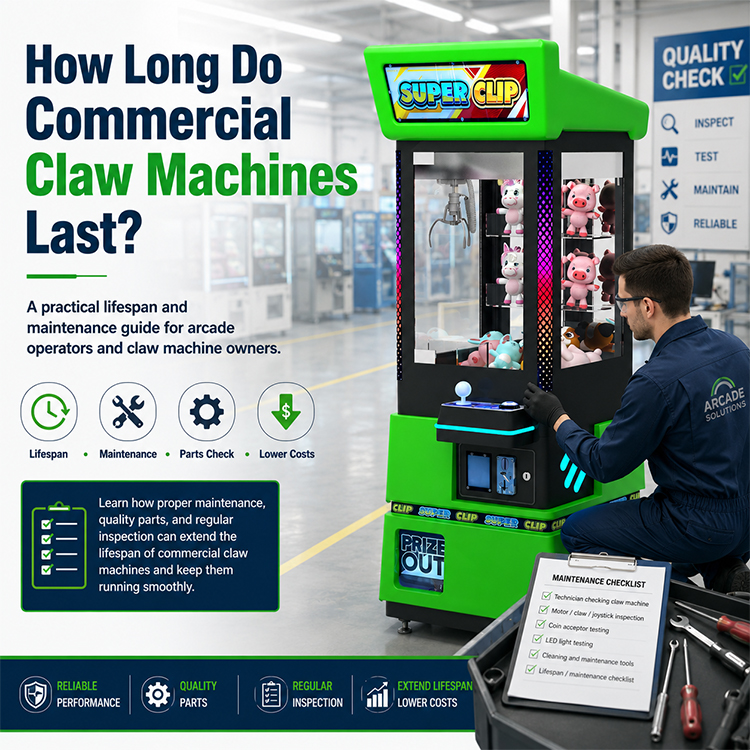
When investing in commercial arcade equipment, buyers naturally ask one important question: How long will the machine last?
For Family Entertainment Centers (FECs), arcades, shopping malls, cinemas, and other entertainment venues, a claw machine is more than just a game—it's a long-term business asset. A well-built machine can provide years of reliable operation, while a low-quality product may require frequent repairs and increase operating costs.
The lifespan of a commercial claw machine depends on several factors, including manufacturing quality, daily usage, maintenance, operating environment, and the availability of replacement parts. Understanding these factors helps buyers make smarter purchasing decisions and maximize their return on investment.
This guide explains what affects the lifespan of commercial claw machines, how to extend their service life, and what to look for when choosing a reliable manufacturer.
How Long Does a Commercial Claw Machine Typically Last?
A high-quality commercial claw machine typically lasts 8–12 years, and many machines remain in operation even longer with proper maintenance.
However, lifespan varies depending on build quality and usage.
Machine Quality |
Expected Service Life |
Economy Models |
3–5 years |
Standard Commercial Models |
5–8 years |
Premium Commercial Models |
8–12+ years |
Unlike home-use amusement machines, commercial claw machines are designed to operate for long hours every day. They are built with stronger cabinets, industrial-grade electronic components, reinforced claw mechanisms, and durable payment systems to withstand continuous public use.
For operators, investing in a higher-quality machine often results in lower maintenance costs and greater long-term profitability.
What Determines the Lifespan of a Claw Machine?
1. Manufacturing Quality
The quality of materials and workmanship is the biggest factor affecting durability.
A reliable commercial claw machine should feature:
- Reinforced steel frame
- Thick tempered glass
- Durable cabinet construction
- High-quality wiring
- Stable power supply
- Industrial-grade claw motor
- Reliable control board
Machines built with low-cost components may appear similar on the outside but often experience more frequent failures after extended operation.
2. Frequency of Use
Usage intensity directly affects wear and tear.
For example:
- A shopping mall machine operating 12 hours per day will experience more mechanical movement than one located in a hotel lobby.
- Machines in busy Family Entertainment Centers may complete thousands of claw cycles every month.
Commercial-grade components are designed for high-frequency operation, but routine inspections become increasingly important in busy venues.
3. Preventive Maintenance
Regular maintenance is one of the easiest ways to extend equipment life.
Recommended maintenance includes:
- Cleaning the cabinet and glass
- Checking the claw mechanism
- Inspecting wiring connections
- Testing payment systems
- Lubricating moving parts where required
- Tightening loose hardware
- Replacing worn components before failure
Preventive maintenance reduces downtime and helps avoid expensive repairs.
Which Parts Wear Out First?
Not every component ages at the same rate.
The following parts usually require the most attention:
Component |
Maintenance Recommendation |
Claw assembly |
Inspect regularly for wear |
Claw cable |
Replace if frayed or stretched |
Joystick and buttons |
Test during routine inspections |
LED lighting |
Replace faulty modules promptly |
Power supply |
Check voltage stability |
Coin or card reader |
Clean regularly |
Prize door locks |
Inspect for security and smooth operation |
The good news is that these parts are generally replaceable, allowing the machine to remain in service for many years without replacing the entire unit.
Does Maintenance Really Affect ROI?
Absolutely.
Two identical claw machines can produce very different financial results depending on how they are maintained.
A clean, fully functional machine provides a better player experience, encourages repeat play, and reduces downtime. In contrast, poorly maintained equipment may suffer from frequent breakdowns, leading to lost revenue and lower customer satisfaction.
Preventive maintenance should be viewed as an investment rather than an expense.
Signs It's Time to Upgrade or Refurbish
A machine doesn't always need to be replaced when it starts showing signs of age.
Many commercial claw machines can be refurbished by replacing key components or updating their appearance.
Consider refurbishment if you notice:
- Scratched or faded cabinet graphics
- Reduced claw performance
- Outdated lighting
- Worn joysticks or buttons
- Aging payment systems
Upgrading LED lighting, adding cashless payment options, or installing new graphics can refresh the customer experience while extending the machine's useful life.
How to Choose a Long-Lasting Commercial Claw Machine
Before purchasing, ask your supplier the following questions:
- What materials are used for the cabinet and frame?
- Are spare parts readily available?
- What warranty is provided?
- How is quality inspection performed?
- Can the machine be upgraded in the future?
- Is remote technical support available?
- Does the manufacturer provide after-sales service?
Choosing a reputable manufacturer with proven production standards and reliable support is often more important than selecting the lowest-priced machine.
Why Manufacturer Experience Matters
Experienced manufacturers understand the demands of commercial entertainment venues and design machines for long-term performance.
When evaluating suppliers, look for:
Years of manufacturing experience
- Factory quality control processes
- International export experience
- OEM and ODM capabilities
- Stable spare parts supply
- Responsive after-sales support
A trustworthy manufacturer helps reduce operational risks and ensures your investment continues generating value for years.
Conclusion
A commercial claw machine is a long-term investment, not a short-term purchase. While the average lifespan ranges from 8 to 12 years, proper maintenance, quality components, and reliable manufacturer support can extend that lifespan even further.
Instead of focusing only on the purchase price, buyers should evaluate durability, replacement part availability, maintenance requirements, and after-sales service. These factors have a much greater impact on the total cost of ownership and long-term profitability.
By choosing a well-built commercial claw machine and following a preventive maintenance schedule, operators can maximize uptime, reduce repair costs, and continue delivering an enjoyable player experience for many years.
FAQ
How long does a commercial claw machine last?
A high-quality commercial claw machine typically lasts 8–12 years, depending on usage and maintenance.
What affects the lifespan of a claw machine?
Build quality, operating hours, preventive maintenance, environmental conditions, and replacement part availability all influence service life.
Which parts require the most maintenance?
The claw assembly, cable, joystick, payment system, LED lighting, and power supply should be inspected regularly.
Can old claw machines be upgraded?
Yes. Many machines can be refurbished with new graphics, LED lighting, cashless payment systems, and replacement components.
Is preventive maintenance necessary?
Yes. Routine maintenance reduces downtime, extends equipment life, and helps maintain a positive customer experience.