
 EN
EN


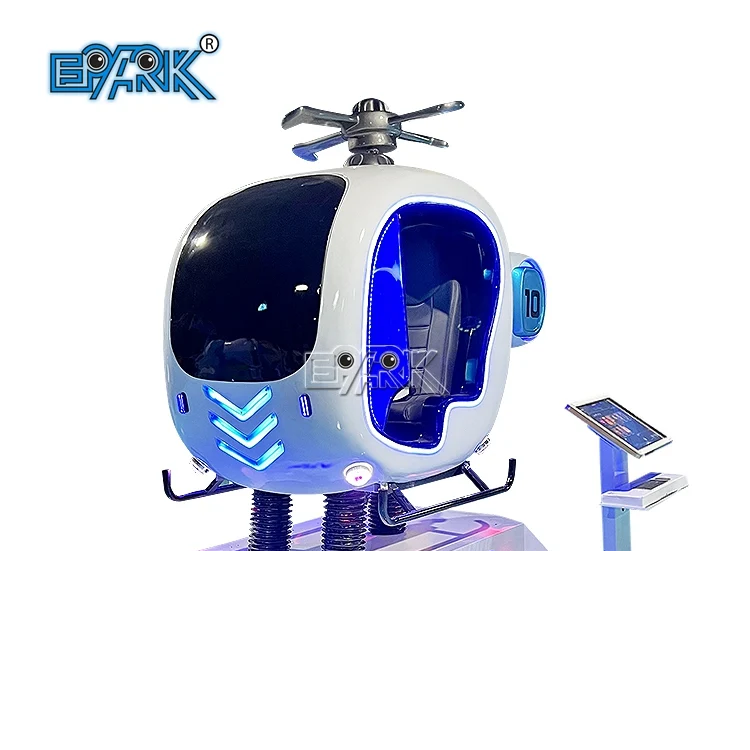
A Rookie Operator’s Lesson Learned
A family entertainment center owner in the UK once shared a cautionary tale. He started his arcade with three budget VR simulators to save on initial investment. The machines attracted crowds initially, but within six months, two had broken down, and his supplier's after-sales support was nearly nonexistent. While he waited weeks for spare parts, he lost thousands in potential weekend revenue. A year later, he replaced all three with higher-quality units. The extra upfront cost was quickly recovered through consistent uptime and repeat customers. His experience highlights a key reality: for commercial use, the purchase price is just the beginning.
Looking Beyond the Initial Sticker Price
The cheapest machine is rarely the most cost-effective in the long run. A total cost of ownership analysis based on aggregated operator data shows that a premium simulator costing $18,000 can be roughly $11,700 cheaper to operate over three years compared to a $6,500 budget model, despite costing more upfront. In this model, the budget-tier unit's projected revenue loss from downtime alone over three years can range from $6,000 to $38,000, potentially exceeding its original purchase price. Long-term value comes from reliability, durability, and the support infrastructure that keeps the machine running and earning.
Motion Platform: Matching Experience to Demand
The motion system defines the customer experience and the ticket price you can charge. For high-volume arcades, 3-Axis simulators offer a faster ROI and break-even up to 2–3 months earlier, making them ideal for racing and standard 9D cinema seats. To create a "mall magnet" and justify premium pricing, a 6-Axis platform offering full 360° motion can draw crowds and command $15–$20 per session for flight and extreme simulation. For many venues, a winning strategy is a hybrid layout: 1–2 high-end 6-Axis machines to attract attention, paired with 3–5 efficient 3-Axis units to handle peak-volume crowds.
The Hidden Value of Content and Support
A machine's profitability depends on keeping players coming back for more, which requires fresh game content. Venues that fail to update their content library at least twice a year see repeat visit rates drop by 25-40%. While budget suppliers often provide limited titles with unclear update policies, mid-range manufacturers typically include quarterly content updates in their warranty period, a service that can save $1,000–$3,000 in ad-hoc fees over two years. Equally important is after-sales support. Reliable suppliers with documented spare parts inventory and 24-hour remote diagnostic capability can keep downtime to 1-3 days per incident, whereas unverified suppliers may leave you waiting for weeks.
Calculating Total Cost of Ownership
When evaluating options, calculate the full total cost of ownership for your expected operating period (typically 3–5 years). This should include the purchase price, shipping and import duties, installation support, spare parts costs, maintenance requirements, content licensing fees, and the critical cost of revenue lost during any downtime. Revenue share and rental models are available as options to reduce upfront risk, particularly for new locations or pilots, though buying outright generally yields lower long-term costs for operators with consistent utilization.
Selecting a Trusted Manufacturing Partner
The reliability of a commercial VR simulator is a direct reflection of the manufacturer's engineering capability and quality control. A manufacturer with a proven track record minimizes the risks of downtime, component failure, and content stagnation. The right manufacturing partner combines scale, quality, and a complete support infrastructure—from integrated R&D and in-house production to responsive after-sales service—to turn a significant capital investment into a consistent, long-term profit center. Over 15 years of industry experience, a substantial manufacturing footprint, and a portfolio of hundreds of proven machine models are the hallmarks of a supplier that can deliver the durability and value that commercial operators require. By ensuring rigorous quality control and a reliable supply of spare parts, a capable partner helps protect an arcade owner's revenue stream and ensures the equipment remains a crowd-pleasing attraction for years to come.