
 EN
EN


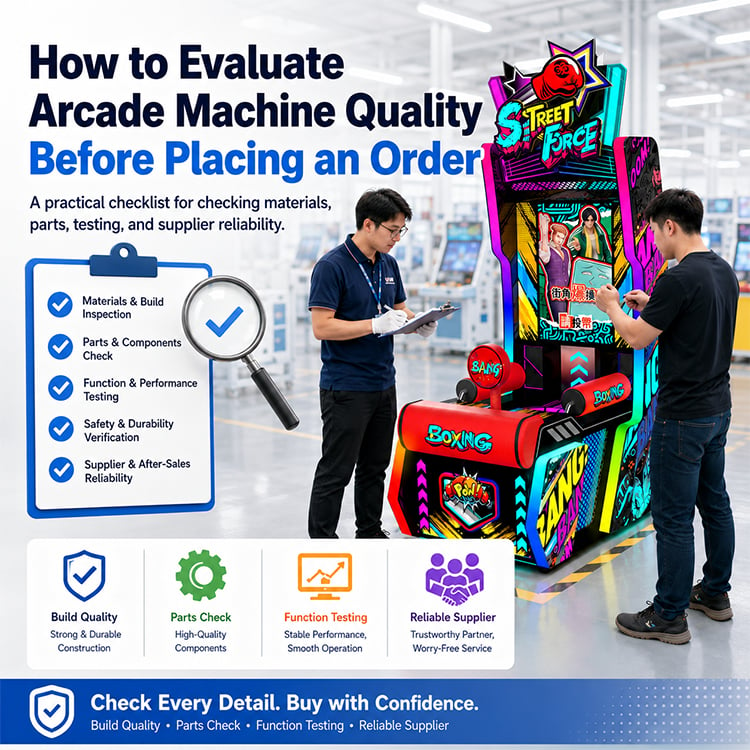
Importing arcade machines from China has become a popular choice for Family Entertainment Centers (FECs), arcades, shopping malls, indoor playgrounds, and distributors around the world. Chinese manufacturers offer a wide range of commercial arcade machines at competitive prices, making them an attractive option for businesses looking to maximize their investment.
However, one of the biggest challenges for first-time buyers is that the factory price rarely reflects the total cost of importing. A quotation may seem affordable at first glance, but additional expenses related to shipping, customs, installation, payment processing, and maintenance can quickly increase the final budget.
These "hidden costs" are not necessarily unexpected charges from the supplier. More often, they are expenses that buyers simply fail to include during the planning stage.
Understanding these costs before placing an order allows buyers to calculate their true investment, compare suppliers fairly, and avoid unpleasant surprises after production is complete.
This guide explains the most common hidden costs when importing commercial arcade machines and provides practical strategies for controlling them.
Understand the Total Landed Cost
Many buyers compare suppliers based only on the unit price of an arcade machine. While product cost is important, it represents only part of the total investment.
A more accurate way to evaluate your purchase is by calculating the Total Landed Cost, which includes every expense required to move the equipment from the factory to your venue.
Typical costs include:
- Product manufacturing
- Export packaging
- Inland transportation
- Ocean or air freight
- Marine insurance
- Customs duties
- Import taxes
- Customs brokerage
- Local transportation
- Installation
- Spare parts
- Maintenance
A supplier offering the lowest machine price may not provide the lowest total landed cost if packaging, quality, or logistics services are insufficient.
Hidden Cost #1: Shipping and Freight Charges
Shipping is often the largest additional expense after the product itself.
Several factors affect freight costs:
- Shipping method (ocean or air)
- Destination country
- Container availability
- Fuel prices
- Peak shipping seasons
- Cargo volume and weight
For commercial arcade machines, ocean freight is usually the most economical solution because machines are large and heavy.
However, buyers should remember that freight rates fluctuate throughout the year. During holiday seasons or periods of high global demand, shipping costs may increase significantly.
Before confirming an order, request an estimated shipping quotation based on your destination and expected delivery schedule.
Choose the Right Incoterms
Many misunderstandings arise because buyers do not fully understand international trade terms.
The most common Incoterms include:
| Incoterm | Supplier Responsibility | Buyer Responsibility |
|---|---|---|
| EXW (Ex Works) | Makes products available at the factory | Handles all transportation, export, shipping, customs, and delivery |
| FOB (Free on Board) | Delivers goods to the departure port and loads them onto the vessel | Pays ocean freight, insurance, import clearance, and local delivery |
| CIF (Cost, Insurance & Freight) | Covers ocean freight and insurance to the destination port | Pays customs clearance, import duties, and inland transportation |
| DDP (Delivered Duty Paid) | Handles nearly the entire shipping process, including duties (where available) | Receives the shipment at the agreed destination |
Understanding these terms helps buyers compare quotations accurately and avoid unexpected logistics costs.
Hidden Cost #2: Customs Duties and Import Taxes
Every country has its own import regulations.
Depending on your location, you may need to pay:
- Import duties
- Value Added Tax (VAT)
- Goods and Services Tax (GST)
- Customs processing fees
- Port handling charges
- Customs brokerage fees
These costs are determined by local customs authorities rather than the manufacturer.
Before ordering, consult a licensed customs broker or freight forwarder to estimate the applicable taxes and documentation requirements. This step can prevent delays and improve budget accuracy.
Hidden Cost #3: Export Packaging
Commercial arcade machines travel thousands of kilometers before reaching their destination. Proper packaging is essential for protecting the equipment during transportation.
Professional export packaging may include:
- Wooden crates
- Reinforced pallets
- Protective foam
- Moisture-resistant wrapping
- Corner protectors
- Shock-absorbing materials
Some quotations include export packaging, while others list it separately.
Although premium packaging may slightly increase upfront costs, it significantly reduces the risk of shipping damage, repair expenses, and insurance claims.
Hidden Cost #4: Insurance
Some buyers choose to skip cargo insurance to reduce costs.
However, international shipments may encounter:
- Rough handling
- Water damage
- Container accidents
- Theft
- Weather-related delays
Cargo insurance usually represents only a small percentage of the shipment value but provides valuable financial protection.
Before shipping, confirm:
- Whether insurance is included
- Coverage limits
- Claim procedures
- Responsibility under the selected Incoterms
Hidden Cost #5: Installation and Site Preparation
Importing the machines is only part of the project.
Your venue should be ready before the equipment arrives.
Site preparation may involve:
- Electrical wiring
- Power outlets
- Internet connections
- Floor reinforcement
- Entrance width verification
- Equipment unloading
- Assembly
- Functional testing
If these preparations are delayed, the machines may remain unused after delivery, increasing project costs and delaying business operations.
Planning installation early helps avoid unnecessary expenses.
Hidden Cost #6: International Payment Fees
International transactions often involve costs beyond the quoted product price.
These may include:
- Bank wire transfer fees
- Currency conversion charges
- Letter of Credit (L/C) fees
- Intermediary bank charges
- International transaction commissions
Before making payment, ask both your bank and the supplier about expected transaction fees.
Some buyers also reduce costs by consolidating payments instead of making multiple small transfers.
Hidden Cost #7: Spare Parts and Maintenance
Commercial arcade machines are designed for continuous operation, but some components naturally wear over time.
Common replacement items include:
- Buttons
- Joysticks
- Sensors
- LED lighting
- Power supplies
- Fans
- Ticket dispensers
- Coin acceptors
Ordering commonly used spare parts together with the machines offers several advantages:
- Lower shipping costs
- Faster repairs
- Reduced downtime
- Better long-term maintenance planning
Waiting until a component fails often results in higher shipping costs and longer interruptions.
Hidden Cost #8: Poor Product Quality
The lowest-priced supplier is not always the most economical choice.
Poor-quality machines can create hidden expenses through:
- Frequent breakdowns
- Higher repair costs
- Customer complaints
- Replacement parts
- Lost revenue during downtime
- Additional technician visits
When evaluating suppliers, buyers should consider:
- Manufacturing experience
- Factory quality control
- Product testing procedures
- Commercial-grade components
- Export history
- Customer references
A slightly higher purchase price may result in significantly lower operating costs over the machine's lifespan.
Hidden Cost #9: Missing Certifications or Documentation
Some countries require specific documents before imported arcade machines can clear customs or be legally installed.
Depending on the destination market, buyers may need:
- Commercial invoice
- Packing list
- Bill of Lading
- Certificate of Origin
- CE certification (where applicable)
- Product testing reports
- User manuals
Incomplete documentation can lead to customs delays, storage fees, or additional administrative costs.
Confirm document requirements before production is completed.
Questions Every Buyer Should Ask Before Ordering
Before confirming an order, review the following checklist with your supplier.
| Question | Why It Matters |
|---|---|
| Does the quotation include export packaging? | Avoid unexpected packaging charges. |
| Which Incoterm is being used? | Clarifies transportation responsibilities. |
| Are freight costs included? | Prevents shipping misunderstandings. |
| Is cargo insurance included? | Protects against transportation risks. |
| What warranty is provided? | Reduces future repair costs. |
| Are spare parts included? | Improves maintenance efficiency. |
| What documents will be supplied? | Supports customs clearance. |
| Has every machine been tested before shipment? | Reduces quality-related issues. |
| Can the supplier provide installation support? | Simplifies project implementation. |
| What technical support is available after delivery? | Ensures long-term operation. |
Practical Tips for Reducing Import Costs
Hidden costs cannot always be eliminated, but they can be managed through careful planning.
Here are several practical strategies:
- Compare quotations based on total landed cost, not only factory price.
- Understand the differences between EXW, FOB, CIF, and DDP before requesting quotations.
- Order a full container whenever possible to reduce shipping costs per machine.
- Purchase recommended spare parts together with the initial shipment.
- Confirm packaging standards before production begins.
- Verify customs requirements with a local broker before shipping.
- Choose suppliers with proven export experience and strong quality control.
- Request factory inspection reports, testing videos, and packaging photos before container loading.
- Plan installation and electrical preparation before the shipment arrives.
- Build a contingency budget for unexpected logistics or customs expenses.
These practices help buyers reduce financial risks while improving project efficiency.
Why Working with an Experienced Manufacturer Makes a Difference
Experienced manufacturers understand that exporting commercial arcade machines involves much more than production.
A professional supplier can assist with:
- Product recommendations based on your venue
- Transparent quotations
- Export packaging
- Quality inspections
- Container loading optimization
- Documentation preparation
- Spare parts planning
- Technical support after delivery
This level of service simplifies the import process and reduces the likelihood of unexpected expenses.
For buyers planning long-term cooperation, choosing an experienced manufacturing partner often provides greater value than selecting the lowest initial quotation.
Conclusion
Importing arcade machines from China can be a cost-effective way to build or expand an entertainment business, but successful projects require careful planning beyond the factory price.
Shipping, customs duties, packaging, insurance, installation, payment fees, spare parts, documentation, and product quality all contribute to the true cost of ownership. Buyers who understand these factors before placing an order are better equipped to manage budgets, avoid delays, and make informed purchasing decisions.
The most successful importers focus on total value rather than the lowest quotation. Working with an experienced manufacturer that provides transparent pricing, reliable quality control, export expertise, and responsive after-sales support can significantly reduce risks throughout the purchasing process.
With the right preparation and the right supplier, importing commercial arcade machines becomes a predictable investment that supports long-term business growth.
Table of Contents
- Understand the Total Landed Cost
- Hidden Cost #1: Shipping and Freight Charges
- Hidden Cost #2: Customs Duties and Import Taxes
- Hidden Cost #3: Export Packaging
- Hidden Cost #4: Insurance
- Hidden Cost #5: Installation and Site Preparation
- Hidden Cost #6: International Payment Fees
- Hidden Cost #7: Spare Parts and Maintenance
- Hidden Cost #8: Poor Product Quality
- Hidden Cost #9: Missing Certifications or Documentation
- Questions Every Buyer Should Ask Before Ordering
- Practical Tips for Reducing Import Costs
- Why Working with an Experienced Manufacturer Makes a Difference
- Conclusion