
 EN
EN


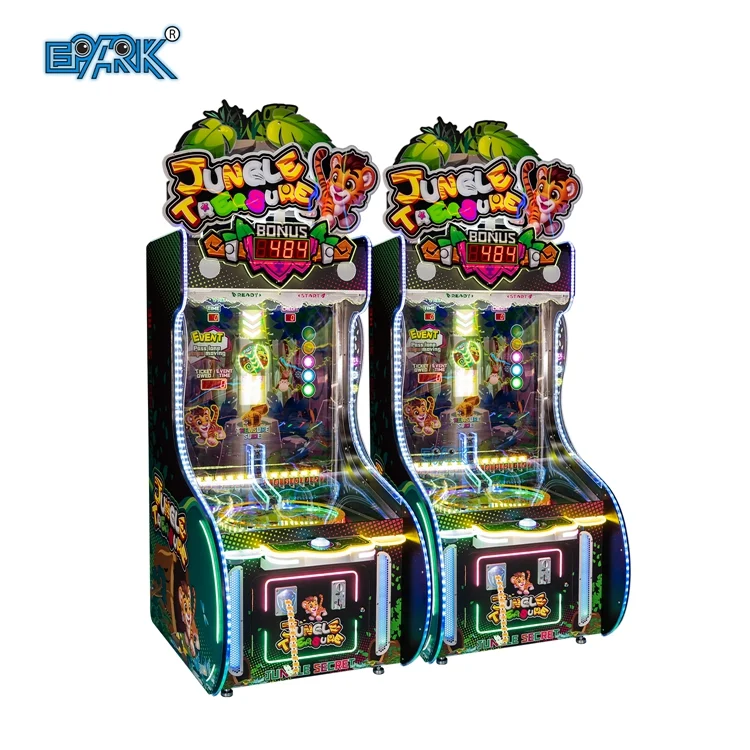
The Profit Engine Behind Every Successful Arcade
Walk into any busy family entertainment center, and you will see the same scene: players feeding coins into redemption machines, tickets spilling out, and a lineup at the prize counter. These games are not just entertainment; they are the financial engine of the arcade. Redemption games account for a significant portion of the arcade machine market and are a primary driver of repeat visits and revenue growth . The key to making them profitable lies in one critical area—setting the rules correctly. A well-tuned machine balances player excitement with a sustainable payout, creating a loop that keeps guests engaged and spending.
Payout Settings Are the Foundation
The most fundamental rule setting is the payout structure. High-quality redemption game machines offer adjustable ticket payout settings, configurable win rates, and multiple difficulty levels . This allows operators to fine-tune the balance between player satisfaction and profit margin. A typical system uses a tiered scoring structure. For example, a machine might be set to award 1 ticket when a player reaches Score Level 1 (with a target of 40% of games reaching this level), 3 tickets at Level 2 (20% target), 6 tickets at Level 3 (10% target), and 10 tickets at Level 4 (5% target) . This tiered approach creates a sense of progression that keeps players motivated. Some advanced systems even use accumulated game data to dynamically suggest optimal score thresholds that maintain the desired payout percentage based on actual player performance . The mantra "Winners Make Players" is a proven principle—visible wins inspire others to join, building the energy that fills an arcade floor.
The Prize-to-Cost Ratio
The golden rule of redemption game profitability is the prize-to-cost ratio. The value of prizes awarded must always be lower than the revenue generated by gameplay. For instance, if a candy bar costs the operator $0.30, and the target payout is 20%, the machine must collect $1.50 in revenue for each candy bar awarded . For a larger prize like an electronic skateboard that requires thousands of tickets, the revenue collected from the many plays needed to accumulate those tickets must far exceed the prize's cost. This is the principle that keeps the business sustainable.
Understanding Regulatory Compliance
Regulatory compliance is not optional. In some jurisdictions, like New Jersey, redemption games are prohibited from distributing tickets based on skill; games must either dispense no tickets or a fixed number per play . The legal definition of "skill" versus "chance" varies significantly across regions. Operators must be aware of local laws and ensure their machine settings are configured to comply—including adjusting ticket payout mechanisms, maximum prize values, and even the type of payment accepted. Some venues have been forced to remove or re-configure machines to meet regulatory requirements .
Hardware Settings: Precision Matters
Behind the software rules is the hardware that executes them. The settings for redemption games are typically accessed through a dedicated service menu or control panel on the machine. Key parameters include:
Payout Percentage Control: This is the master setting that determines how much the machine returns to players over time.
Score Thresholds: The score a player must achieve to trigger a ticket payout. This can often be set across multiple tiers.
Ticket Dispensing: The machine must be configured to dispense the correct number of tickets per payout event. A reliable ticket dispenser is the most critical mechanical subsystem, expected to handle 500,000+ cycles before service. Commercial-grade dispensers are far more reliable than generic alternatives that fail within 6–12 months.
Choosing a Manufacturer That Delivers Control
The ability to set rules effectively depends entirely on the machine's quality and programmability. A reliable manufacturer provides accessible interfaces for fine-tuning payouts, difficulty levels, and credit settings. EPARK, with over 15 years of experience in the arcade machine industry, offers redemption game machines designed for easy configuration and stable operation [citation:client website]. Their factory-direct supply and one-stop service model support arcade owners in selecting the right equipment and setting rules that maximize profitability. For operators building a profitable arcade, choosing equipment from a manufacturer that combines durable hardware with flexible, user-friendly settings is the foundation of a successful redemption program.