
 EN


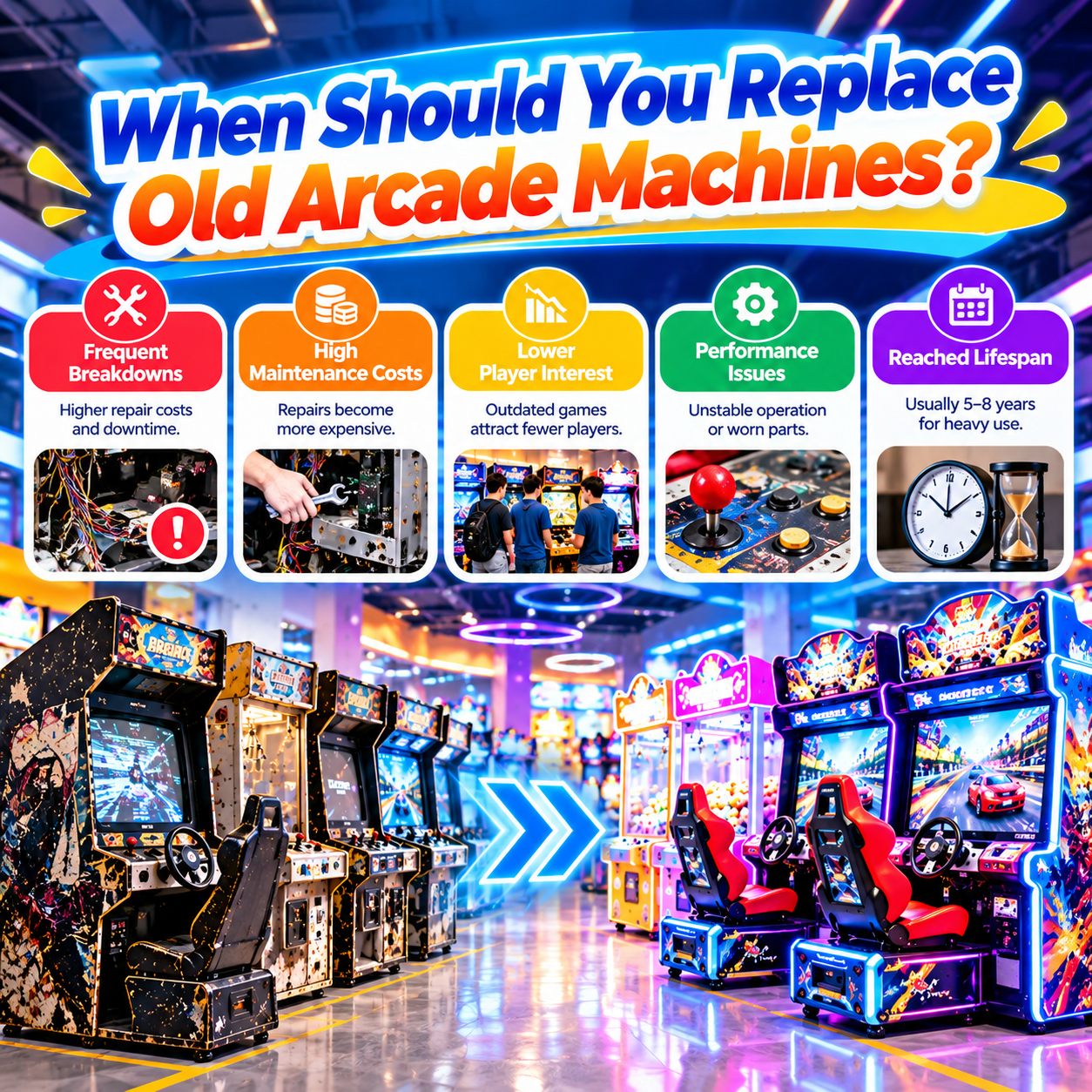
When Should You Replace Old Arcade Machines?
Commercial arcade machines are valuable assets for family entertainment centers (FECs), shopping mall arcades, and indoor amusement venues. However, even reliable equipment may eventually become less suitable for a business due to mechanical wear, changing customer preferences, or increasing operating expenses.
For arcade operators, deciding whether to repair, upgrade, or replace an existing machine is an important part of long-term business management.
Replacing equipment too early may create unnecessary investment costs. Continuing to operate outdated machines can also lead to frequent repairs, reduced customer satisfaction, and missed revenue opportunities.
Understanding the warning signs of aging equipment can help arcade owners make better purchasing decisions and maintain a competitive entertainment environment.
Why Arcade Machine Replacement Planning Matters
Arcade equipment replacement should be treated as a planned business decision rather than an emergency response to machine failure.
A structured replacement strategy helps operators evaluate equipment condition, customer demand, and long-term operating costs.
It can also reduce unexpected investment pressure by allowing businesses to prepare equipment budgets in advance.
For larger entertainment centers with many machines, regular performance reviews are particularly important.
1. Monitor Frequent Equipment Breakdowns
One of the clearest signs that an arcade machine may need replacement is an increasing number of breakdowns.
Occasional component failures do not necessarily mean that the entire machine should be replaced. Many problems can be resolved through routine maintenance or compatible spare parts.
However, repeated failures involving multiple components may indicate broader equipment deterioration.
Operators should record repair frequency, machine downtime, and recurring technical problems.
If a machine repeatedly interrupts customer gameplay despite proper servicing, a replacement evaluation may be appropriate.
2. Compare Repair Costs With Replacement Costs
Repair expenses can increase as commercial arcade machines age.
Operators should consider not only the immediate repair quotation but also the cost of future maintenance and potential downtime.
For example, replacing a worn button is usually a relatively simple maintenance task. Repeated failures involving major electronic or mechanical systems may require more extensive investment.
When comparing repair and replacement options, evaluate the total expected cost over a defined period.
Include replacement parts, technician labor, transportation, installation, and potential revenue lost during downtime.
A new machine may require a higher initial investment but could offer lower maintenance requirements or stronger customer appeal.
The best decision depends on actual equipment condition and financial performance.
3. Review Machine Revenue and Customer Demand
A technically functional arcade machine may still become less valuable if customers rarely use it.
Operators should regularly review machine revenue, play counts, and utilization patterns.
A decline in performance may indicate changing customer interests, but other factors should also be considered.
Poor placement, pricing, machine settings, or limited visibility can affect customer participation.
Before replacing equipment, operators may test reasonable adjustments such as relocating the machine or reviewing its pricing strategy.
If performance remains weak after these changes, replacement with a more suitable attraction may be worth considering.
4. Identify Outdated Gameplay Experiences
Entertainment preferences change over time.
Customers may become interested in new gameplay features, multiplayer experiences, larger displays, or more interactive attractions.
Older machines can remain popular, especially when they offer familiar and enjoyable gameplay. Therefore, equipment age alone should not determine replacement decisions.
Instead, operators should evaluate whether existing machines still match their target audience.
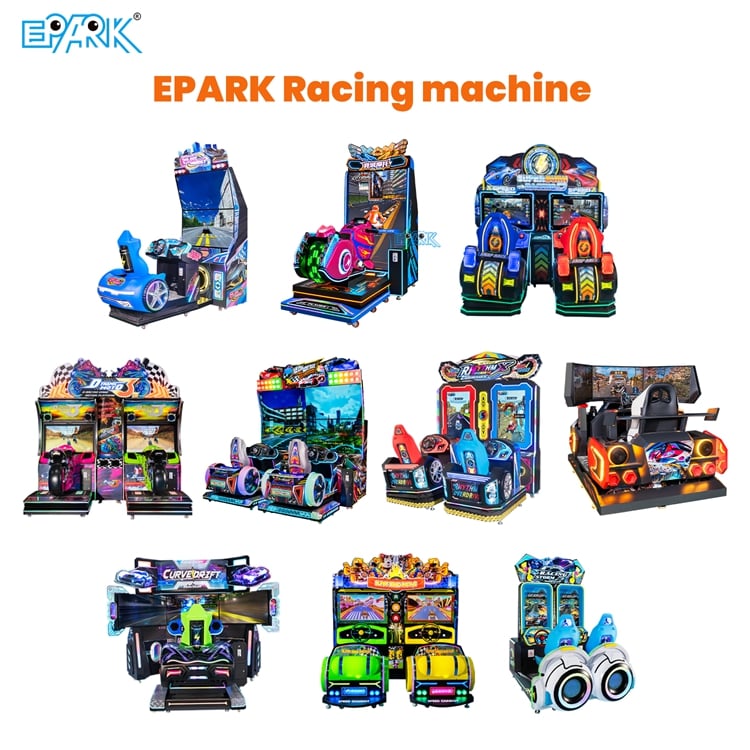
For example, an arcade serving teenagers and young adults may benefit from introducing newer competitive racing or interactive gaming experiences.
A family-oriented FEC may prioritize updated redemption games, suitable kiddie attractions, or multiplayer entertainment equipment.
The objective is to maintain a balanced selection that reflects actual customer demand.
5. Evaluate Equipment Appearance and Cabinet Condition
The physical appearance of arcade machines influences the overall impression of an entertainment venue.
Damaged cabinet panels, faded graphics, scratched displays, and worn controls may make equipment appear poorly maintained.
In some cases, cosmetic refurbishment can restore the machine's appearance without requiring complete replacement.
Operators should evaluate whether cabinet repairs, replacement graphics, or new control components are practical.
However, equipment with extensive structural damage or safety concerns may require a more comprehensive assessment.
Maintaining a visually consistent entertainment environment helps create a professional impression for customers.
6. Check Spare Parts and Technical Support Availability
Spare parts availability is an important factor in long-term arcade equipment management.
Older machines may use components that are difficult to source or no longer supported by the original manufacturer.
When a critical component becomes unavailable, repair time and costs may increase.
Operators should contact their equipment suppliers to confirm whether compatible replacement parts remain available.
Technical documentation and troubleshooting support are also valuable.
If essential components cannot be obtained reliably, replacing the machine may become more practical than continuing to operate it.
7. Consider Energy Consumption and Operating Efficiency
Electricity consumption is another factor worth reviewing when evaluating older arcade equipment.
Different machine categories have different power requirements, and energy use depends on operating hours, machine configuration, and actual usage.
Some newer equipment may offer more efficient electronic components or improved power management features.
However, operators should compare verified specifications rather than assuming that every new machine consumes less electricity.
For venues operating many machines, small differences in power consumption may become meaningful over time.
Energy costs should be considered alongside maintenance expenses, customer demand, and equipment purchase prices.
8. Plan Equipment Replacement Without Disrupting Operations
Replacing multiple machines simultaneously can create operational challenges.
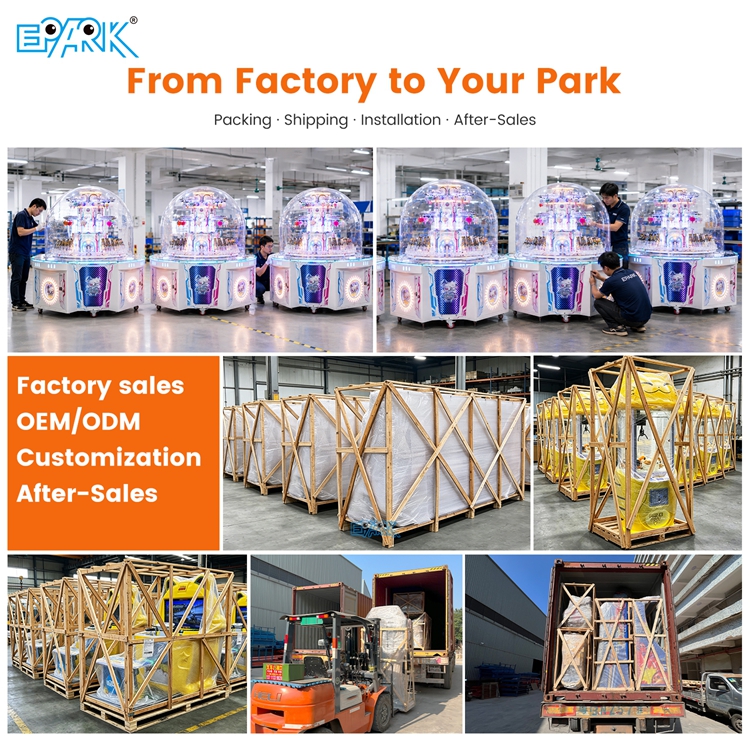
Operators may need to coordinate shipping, installation, electrical preparation, and the removal of existing equipment.
A phased replacement strategy can help reduce disruption.
Start by identifying machines with the highest repair costs, lowest customer demand, or most serious performance concerns.
Then prioritize replacements according to available budget and expected business value.
For international buyers, delivery schedules and import procedures should also be considered.
Planning equipment upgrades in advance helps entertainment venues maintain operations while introducing new attractions.
9. Choose Replacement Machines Based on Business Needs
When replacing outdated equipment, avoid selecting new machines based only on appearance or popularity.
A suitable replacement should match the venue's available space, customer demographics, operating budget, and entertainment concept.
For example, compact claw machines may be appropriate for a small shopping mall arcade, while larger FECs may have sufficient space for multiplayer racing machines or VR attractions.
Before placing an order, confirm machine dimensions, electrical requirements, gameplay features, maintenance needs, and after-sales support.
A well-matched replacement can contribute to a more balanced arcade equipment selection.
10. Work With an Experienced Arcade Machine Manufacturer
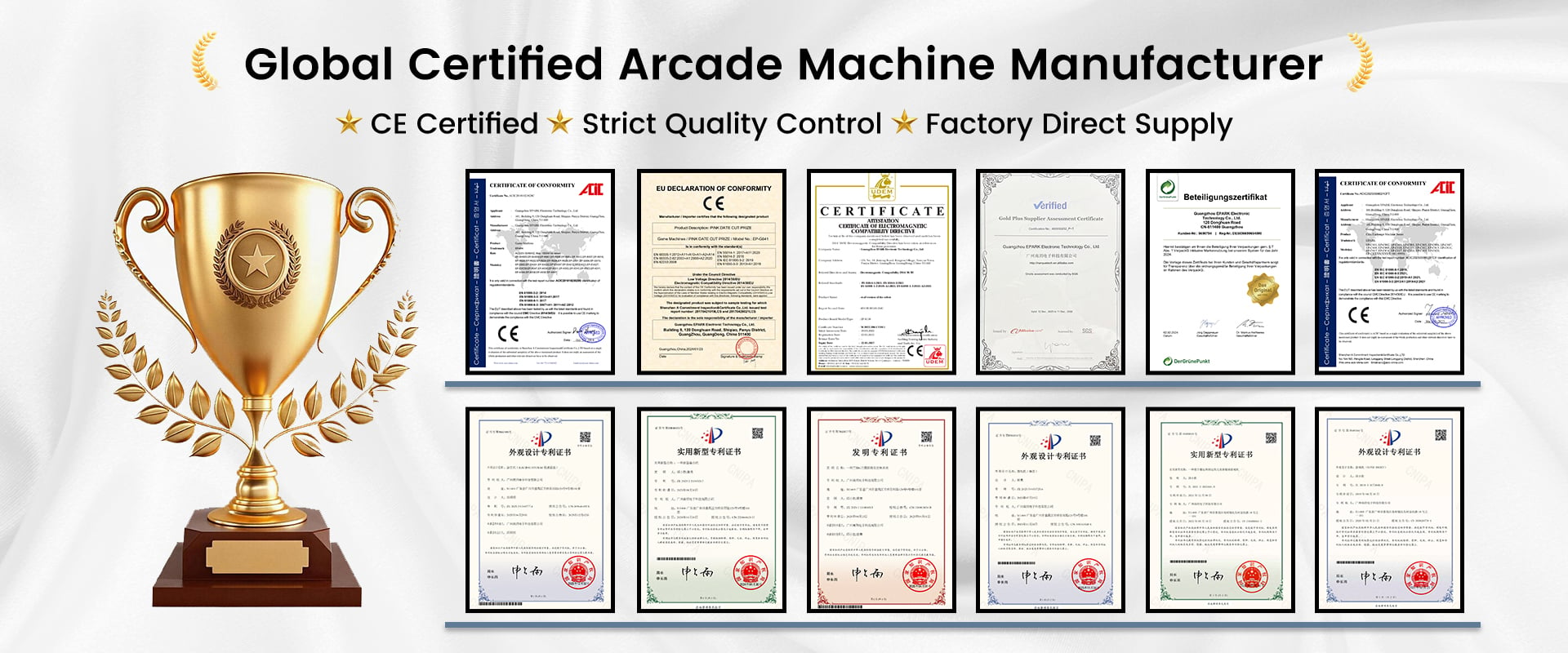
Choosing a reliable manufacturer can simplify arcade equipment replacement and future expansion planning.
An experienced supplier can provide technical specifications, equipment recommendations, customization options, and project assistance.
EPARK is a professional commercial arcade machine manufacturer based in Guangzhou, China, with over 14 years of manufacturing experience.
Our product range includes claw machines, racing arcade games, redemption machines, basketball games, boxing machines, VR equipment, and other commercial amusement attractions.
EPARK supports international arcade operators, distributors, and entertainment investors with equipment selection, layout planning, product customization, manufacturing, quality inspection, and after-sales assistance.
For businesses upgrading existing venues, equipment recommendations can be reviewed according to available floor space, target customers, and project requirements.
Explore more commercial arcade equipment at EPARK Game Machine Factory.
Frequently Asked Questions
How Long Do Commercial Arcade Machines Usually Last?
There is no universal lifespan for commercial arcade machines. Service life depends on equipment quality, operating hours, maintenance practices, environmental conditions, and component availability.
Regular inspections and appropriate maintenance can help extend useful operation.
Is It Better to Repair or Replace an Old Arcade Machine?
The decision depends on repair costs, equipment condition, spare parts availability, and expected future performance.
Minor problems may justify repair, while repeated expensive failures or unavailable components may make replacement more practical.
How Often Should Arcade Owners Upgrade Their Equipment?
There is no fixed upgrade schedule suitable for every arcade.
Operators should review machine performance regularly and consider upgrades when customer demand changes, maintenance expenses increase, or new equipment offers a clear business advantage.
Conclusion
Replacing old arcade machines is an important part of maintaining a competitive and efficient entertainment business.
By monitoring repair frequency, customer demand, operating expenses, equipment appearance, and spare parts availability, arcade operators can make more informed replacement decisions.
The goal is not to replace every older machine but to identify equipment that no longer meets the venue's operational and commercial needs.
For FEC owners, distributors, and entertainment investors, a planned equipment replacement strategy can help control expenses while keeping the arcade experience attractive.
Visit EPARK Game Machine Factory to explore commercial arcade machines and discuss suitable equipment upgrades for your entertainment project.
Table of Contents
- When Should You Replace Old Arcade Machines?
- Why Arcade Machine Replacement Planning Matters
- 1. Monitor Frequent Equipment Breakdowns
- 2. Compare Repair Costs With Replacement Costs
- 3. Review Machine Revenue and Customer Demand
- 4. Identify Outdated Gameplay Experiences
- 5. Evaluate Equipment Appearance and Cabinet Condition
- 6. Check Spare Parts and Technical Support Availability
- 7. Consider Energy Consumption and Operating Efficiency
- 8. Plan Equipment Replacement Without Disrupting Operations
- 9. Choose Replacement Machines Based on Business Needs
- 10. Work With an Experienced Arcade Machine Manufacturer
- Frequently Asked Questions
- Conclusion