
 EN
EN


The Neuroscience of Engagement: Dopamine and the 'One More Race' Loop
Arcade racing games tap directly into the brain’s reward system, making players feel a rush of excitement with every lap completed or time beaten. The key driver is dopamine—a neurotransmitter linked to pleasure, motivation, and learning. When a player succeeds—even in a small way—the brain releases a burst of dopamine, reinforcing the behavior and creating a powerful incentive to try again. This biological feedback loop is what makes these machines so hard to walk away from.
How Racing Game Machines Trigger Instant Dopamine Release
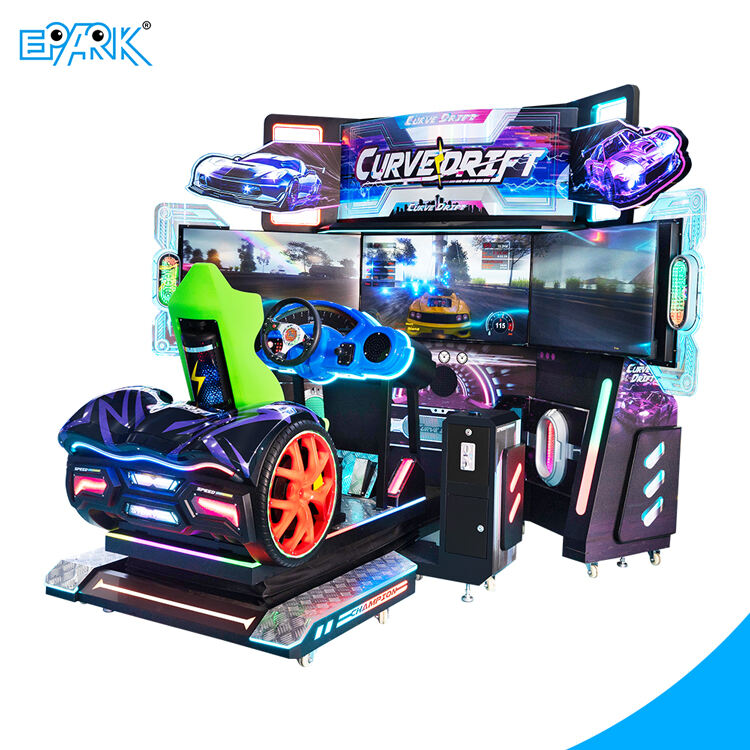
Modern racing game machines are engineered for immediate reward. Crossing the finish line, landing a perfect drift, or overtaking an opponent triggers synchronized audio-visual cues—flashing lights, celebratory sound effects, and on-screen point bonuses—that signal success in under 200 milliseconds. That speed is critical: neuroscientific research shows dopamine release peaks when feedback follows action within this narrow window, strengthening neural pathways tied to repetition and persistence. Crucially, these rewards are skill-contingent—not random—so players perceive control and agency. Unlike slot machines, where outcomes are probabilistic, racing game machines tie dopamine spikes directly to effort and improvement, fueling sustained engagement and deepening the “one more race” impulse.
Rapid Feedback Cycles and Skill-Contingent Rewards in Arcade Racing Games
These machines operate on tight, real-time feedback loops: every turn of the wheel, press of the pedal, or brake input yields an instantaneous visual and haptic response—screen movement, steering resistance, seat vibration. This immediacy strengthens the brain’s association between action and outcome, accelerating motor learning and reinforcing intentional play. Combined with skill-based progression—unlocking faster cars, new tracks, or higher leaderboard tiers—the experience satisfies core psychological needs for competence and autonomy. As noted in Motivation and Personality (Deci & Ryan, 1985), rewards tied to demonstrable mastery activate deeper, longer-lasting motivation than those based on chance alone. In racing game machines, each attempt feels purposeful—and the next race always holds the promise of measurable growth.
Psychological Drivers: Mastery, Competition, and Emotional Resonance
Skill-Based Progression and the Appeal of Tangible Improvement
Arcade racing game machines convert abstract practice into visible, quantifiable gains: shaved milliseconds, improved cornering angles, consistent drift timing. For young players especially, this tangible evidence of progress aligns with developmental drives for mastery and self-efficacy. The arcade environment compresses learning curves—repetition is rapid, consequences are low-stakes, and feedback is unambiguous—making improvement feel both achievable and rewarding. Over time, players develop fine-grained muscle memory and spatial intuition, transforming novice reflexes into confident, anticipatory control. This isn’t just about winning; it’s about witnessing one’s own evolving capability in real time—a potent intrinsic motivator rooted in human cognitive architecture.
Excitement, Frustration, and Flow States in Racing Game Machine Play
Racing game machine sessions thrive on emotional contrast: the exhilaration of a clean overtake, the sting of a barrier hit, the tension of a photo-finish. This dynamic interplay of challenge and skill is the hallmark of flow states—moments of total absorption where self-consciousness fades and time distorts. According to Mihaly Csíkszentmihályi’s foundational flow theory, such states emerge most reliably when perceived challenge closely matches perceived skill. Arcade cabinets amplify this through physical fidelity: force-feedback wheels transmit subtle grip loss, motion platforms simulate G-forces, and surround sound immerses the player in engine harmonics and crowd noise. These sensory inputs don’t just enhance realism—they modulate arousal levels, helping players recalibrate after setbacks and sustain focus through repeated attempts. The result is not passive entertainment, but an emotionally resonant, self-regulating experience that feels both demanding and deeply satisfying.
Social Anchors: Leaderboards, Shared Play, and Peer Validation
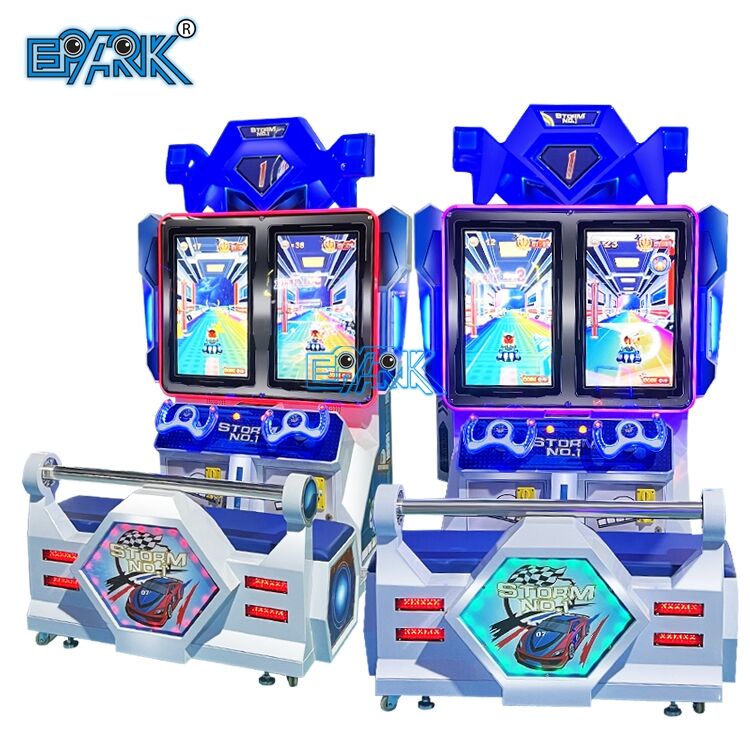
Arcade racing game machines transform solo play into shared ritual. Leaderboards—displayed prominently above or beside the cabinet—turn individual performance into public achievement. A 2022 study by the Entertainment Software Association found leaderboards increase repeat play among teens and young adults by 12%, particularly when rankings update in real time and include avatars or personal identifiers. Seeing one’s name rise—or narrowly miss the top spot—triggers social validation and fuels goal-directed persistence. Even more powerful is co-located social play: friends cheering live races, comparing lap splits side-by-side, or challenging each other to head-to-head duels. These interactions satisfy fundamental needs for belonging, recognition, and status—needs especially salient during adolescence and early adulthood. For many players, the machine becomes less a game and more a social node: a place to gather, compete, celebrate, and return to—week after week—not just for the race, but for the connection.
Sensory Engineering: Why Racing Game Machines Command Attention
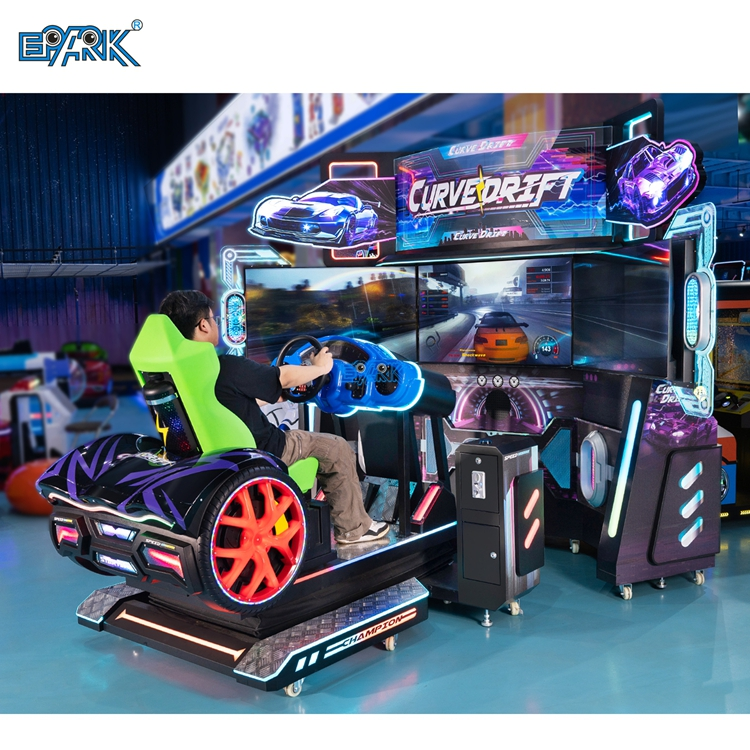
Modern racing game machines deploy multisensory design as a strategic engagement tool. High-resolution curved displays with 120Hz refresh rates deliver immersive track perspectives, while directional audio systems replicate engine pitch shifts and tire-surface friction with surgical precision. But the true differentiator lies in haptics: force-feedback steering wheels that resist turns with realistic torque, pedal assemblies that simulate brake fade, and motion platforms that tilt, shake, and surge in sync with virtual physics. These elements converge to trigger the brain’s vestibular and somatosensory systems—effectively “tricking” perception into accepting the simulation as physically real. As documented in peer-reviewed work on embodied cognition (e.g., Frontiers in Psychology, 2021), such sensorimotor alignment increases attentional capture, reduces cognitive load, and extends voluntary engagement. The result is not just immersion—it’s presence: the visceral, in-the-moment conviction that you are driving. And when presence is this complete, stepping away doesn’t feel like ending a game—it feels like leaving the track.
FAQ
1. Why are arcade racing games so addictive?
Arcade racing games engage the brain’s dopamine-driven reward system with instant feedback, skill-based progression, and sensory-rich experiences. Players feel motivated to improve and try again due to the immediate rewards and emotional resonance.
2. How do racing game machines create such immersive experiences?
These machines use high-resolution displays, directional audio, force-feedback haptics, and motion platforms to mimic real driving experiences. This multisensory approach enhances presence and keeps players engaged.
3. What role do leaderboards play in arcade games?
Leaderboards provide social validation and competition, which encourage players to return and improve. They satisfy the need for recognition while boosting engagement through real-time ranking updates.
4. How do flow states contribute to the appeal of arcade games?
Flow states, where challenge and skill are balanced, create moments of total absorption and satisfaction. Racing game machines amplify this with realistic physics, tactile feedback, and emotional highs and lows.
5. Are arcade racing games entirely skill-based?
Yes, outcomes in arcade racing games rely heavily on skill, giving players a sense of control and agency unlike chance-based games like slots. This connection to effort and improvement deepens the engagement.