
 EN
EN


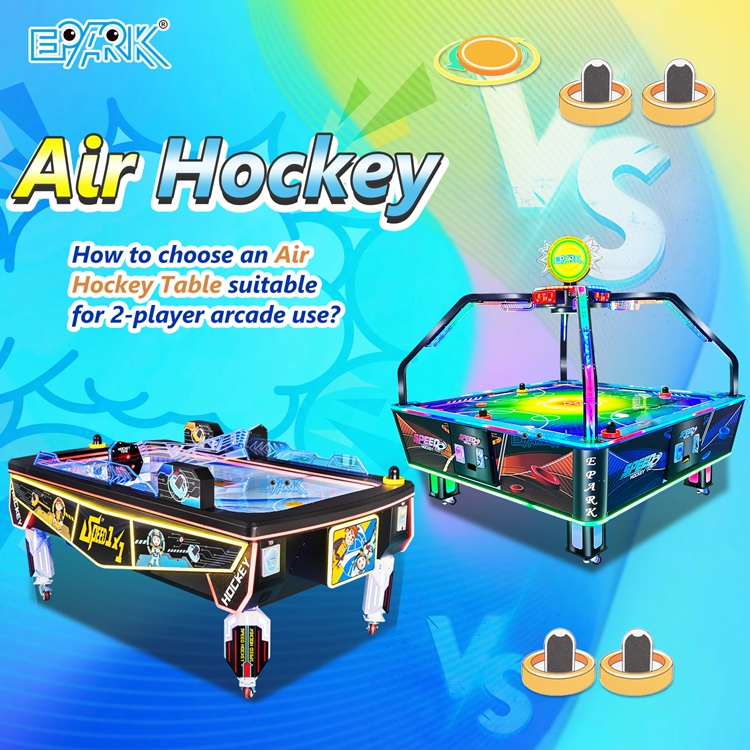
Understanding Arcade-Style Air Hockey Tables for 2-Player Competition
What Defines an Arcade-Style Air Hockey Table and Why It Suits Competitive Play
Air hockey tables built in the classic arcade style are made to last through countless games while still delivering top notch performance. Most models have playfields that are around 1.5 inches thick, paired with heavy duty blowers capable of pushing over 120 cubic feet per minute of air to keep that smooth gliding effect going all game long. The sides are reinforced with extra strong rails and those 360 degree bumpers can take quite a beating from wild slap shots without breaking down, which makes these tables perfect for head to head battles between two players looking to outscore each other. Since they're meant for commercial settings like bars and restaurants, manufacturers typically equip them with digital score counters and special anti tilt features so games stay fair and don't get interrupted mid match, no matter how heated things get on the table.
Key Differences Between Arcade-Style and Residential Air Hockey Tables
| Feature | Arcade-Style Tables | Residential Tables |
|---|---|---|
| Frame Material | Powder-coated steel | Medium-density fiberboard |
| Airflow Power | 120—200 CFM blowers | 60—80 CFM blowers |
| Scoring System | Electronic LED displays | Manual sliding counters |
| Lifespan | 10+ years (daily use) | 3—5 years (occasional use) |
Arcade models emphasize longevity and tournament-level responsiveness, while residential versions focus on affordability and compact design.
Why Professional-Grade Tables Enhance the 2-Player Air Hockey Experience
The commercial versions of air hockey tables cut down on puck friction by around 40% when compared to what's found at home, which means games are generally quicker and feel much smoother during play. Most come in sizes between seven and eight feet long, with specially designed areas where players can move side to side without getting cramped. The corners are built extra strong so they don't bend out of shape even after hundreds upon hundreds of intense matches. Because these tables hold up so well over time, they maintain their quality performance level, which is why most arcades stock them instead of cheaper alternatives. Serious players who want to practice against someone else face to face will definitely notice the difference.
Durability and Build Quality for High-Traffic Arcade Environments
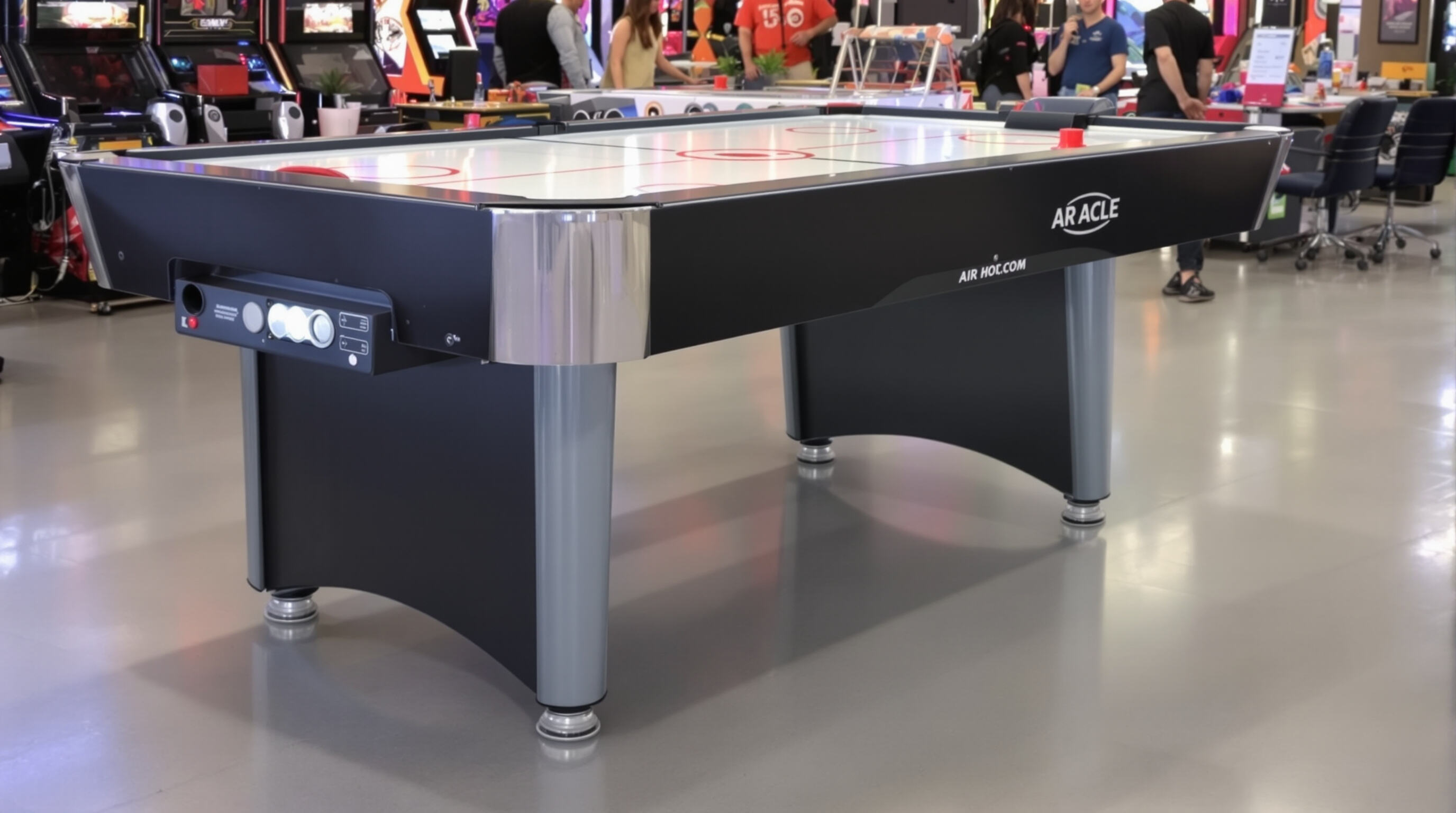
Essential materials and construction standards for commercial air hockey tables
Professional air hockey tables use 0.75"–1" thick high-density polyethylene (HDPE) playing surfaces and aircraft-grade aluminum rails to maintain smooth puck glide and resist deformation. The base combines powder-coated steel legs with reinforced polymer corners, a design proven to withstand repeated puck rebounds and player contact in high-traffic settings.
Frame strength and rail durability: What withstands constant 2-player use
Arcade tables feature cross-braced steel substructures that reduce lateral flex by up to 40% compared to residential units. The rails incorporate triple-laminated edges with silicone bumper inserts, a configuration tested to endure over 200,000 puck impacts before maintenance is needed, ensuring long-term accuracy and resilience.
Lifespan expectations and performance under heavy rotation in arcades
Commercial arcade tables that are built right can stick around for about 8 to 12 years even in busy locations if someone actually takes care of them. A recent look at the amusement industry from 2023 showed something interesting too. The tables with those solid steel frames underneath and surfaces where the parts were bonded together with heat had way fewer problems compared to ones that were just welded together. We're talking roughly three quarters less breakdowns during those crazy rush times when everyone wants to play at once. And let's not forget regular upkeep matters a lot too. Monthly checks like swapping out those dusty blower filters and making sure all the rails line up straight really makes a difference in how long these machines keep working properly.
Air Blower System: Power, CFM, and Noise Balance for Arcade Performance
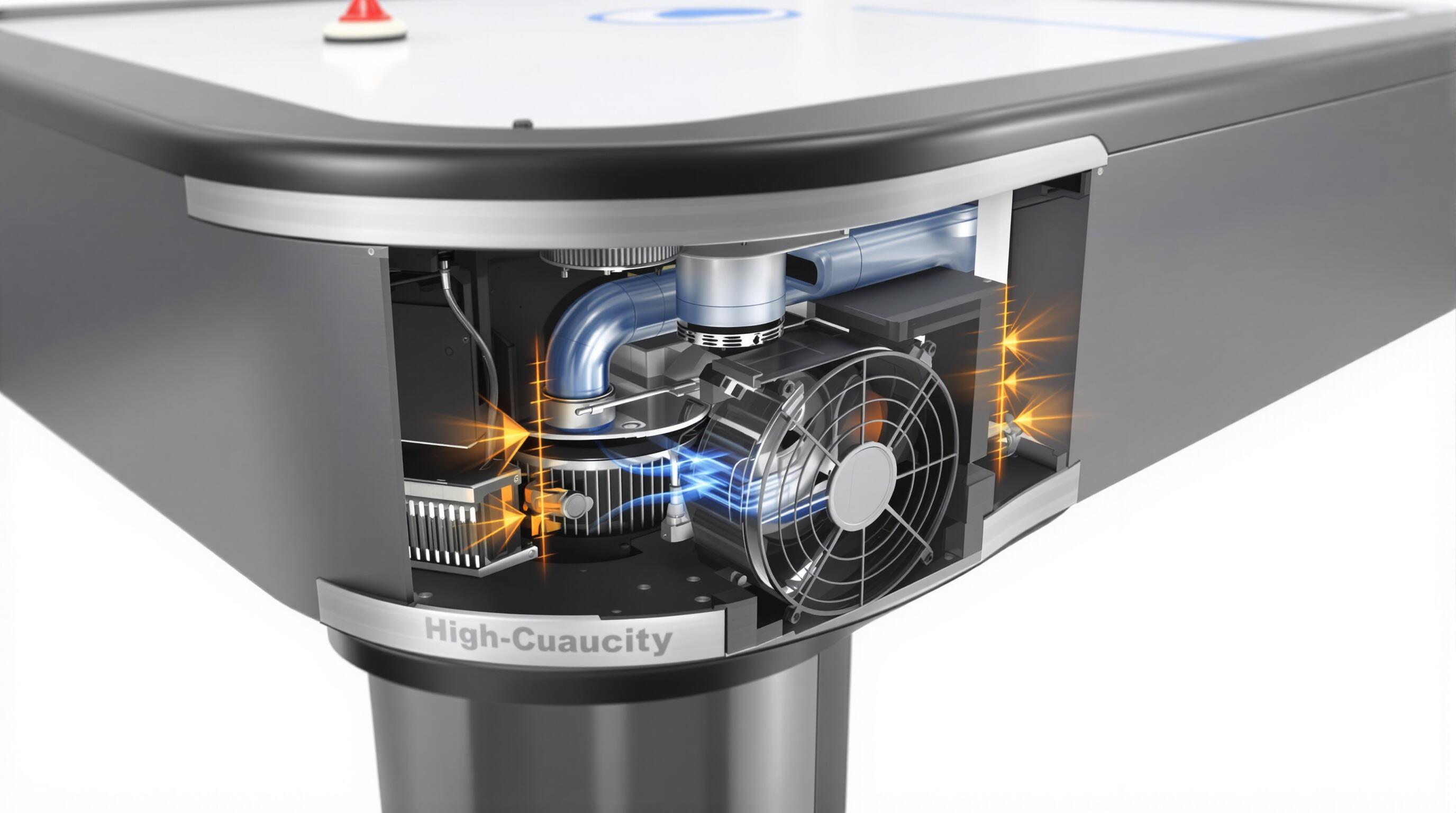
How Motor Power and Airflow (CFM) Affect Puck Speed and Gameplay Realism
A minimum of 120 CFM is required for professional-grade air hockey tables to create a consistent 0.2mm air cushion that enables frictionless puck movement. Brushless DC motors provide 20% faster puck speeds and 15% greater energy efficiency compared to traditional AC motors, enhancing both gameplay realism and operational sustainability.
Minimum CFM Recommendations for Authentic Air Hockey Table Action
For optimal performance:
- 150—180 CFM is recommended for high-traffic arcades hosting competitive 2-player matches
-
120—140 CFM suits casual entertainment centers
Tables below 100 CFM are prone to “dead zones†where pucks stall, reducing game intensity by 34%, according to arcade patron feedback.
Managing Noise Levels Without Sacrificing Performance in Public Spaces
Modern blower systems achieve under 65 dB at 150 CFM through vibration-dampened motor mounts, aerodynamic fan blades, and insulated air channels. This 15 dB reduction from older models allows compliance with typical 70 dB venue noise limits while maintaining ENERGY STAR®-equivalent efficiency and smooth puck glide.
Scoring Systems and Player Engagement: Electronic vs Manual in 2-Player Matches
Benefits of Electronic Scoring for Competitive Air Hockey Dynamics
Electronic scoring eliminates manual errors and keeps gameplay fluid by accurately tracking points in real time. This reliability supports fast-paced volleys and aligns with tournament standards, where 78% of players in a 2024 equipment survey reported that manual counters disrupted match flow due to miscounts.
Integrated Features: Digital Displays, Sound Effects, and Automatic Tracking
Advanced systems enhance engagement with full-color LED displays showing scores and shot speeds, customizable sound effects for goals and resets, and automatic match timers with overtime modes. These features replicate the immersive arcade experience, which studies show is associated with premium entertainment by 63% of patrons.
User Satisfaction Studies: Do Electronic Systems Improve 2-Player Engagement?
Arcades using electronic scoring report 40% more repeat plays on air hockey tables than those with manual systems. Players spend 28% more time per session when dynamic lighting and victory fanfare are included, and collision detection reduces scoring disputes by 91% in controlled trials.
Optimal Size, Dimensions, and Space Planning for Commercial Air Hockey Tables
Standard Sizes for 2-Player Air Hockey Tables in Arcade and Entertainment Venues
Regulation commercial air hockey tables measure 7—8 feet long and 3.5—4 feet wide, matching professional tournament dimensions. This size supports full player reach and precise control, essential for competitive 2-player action.
| Table Size | Ideal Use Case | Minimum Space Requirement |
|---|---|---|
| 7-8 ft (Full-Size) | Arcades, sports bars | 13 ft à 8 ft |
| 5-6 ft (Mid-Size) | Family entertainment centers | 10 ft à 6 ft |
| 4 ft (Compact) | Limited-space venues | 7 ft à 5 ft |
Clearance, Layout, and Foot Traffic: Designing Around High-Usage Installations
Provide 3—4 feet of clearance on all sides to accommodate player movement and mallet swings, especially in busy venues. Angled placement improves spectator visibility without obstructing walkways, and anti-tip brackets ensure stability during intense matches. Central positioning in high-traffic zones maximizes visibility and engagement while preserving safe evacuation routes.
FAQ
What is an arcade-style air hockey table?
An arcade-style air hockey table is a robust and durable table designed for competitive play, featuring thicker playfields, strong rails, and high-power air blowers for smooth puck movement.
What are the differences between arcade-style and residential air hockey tables?
Arcade tables are built with powder-coated steel frames, powerful air blowers, and electronic scoring, while residential tables use medium-density fiberboard and manual sliding counters.
Why are professional-grade tables preferred for 2-player games?
Professional-grade tables offer enhanced stability, smoother puck movement, and greater longevity, which are ideal for competitive play between two players.
What sizes are standard for arcade air hockey tables?
Standard sizes for arcade air hockey tables are typically 7 to 8 feet long, providing ample space for competitive gameplay.
Table of Contents
- Understanding Arcade-Style Air Hockey Tables for 2-Player Competition
- Durability and Build Quality for High-Traffic Arcade Environments
- Air Blower System: Power, CFM, and Noise Balance for Arcade Performance
- Scoring Systems and Player Engagement: Electronic vs Manual in 2-Player Matches
- Optimal Size, Dimensions, and Space Planning for Commercial Air Hockey Tables
- FAQ