
 EN


Introduction
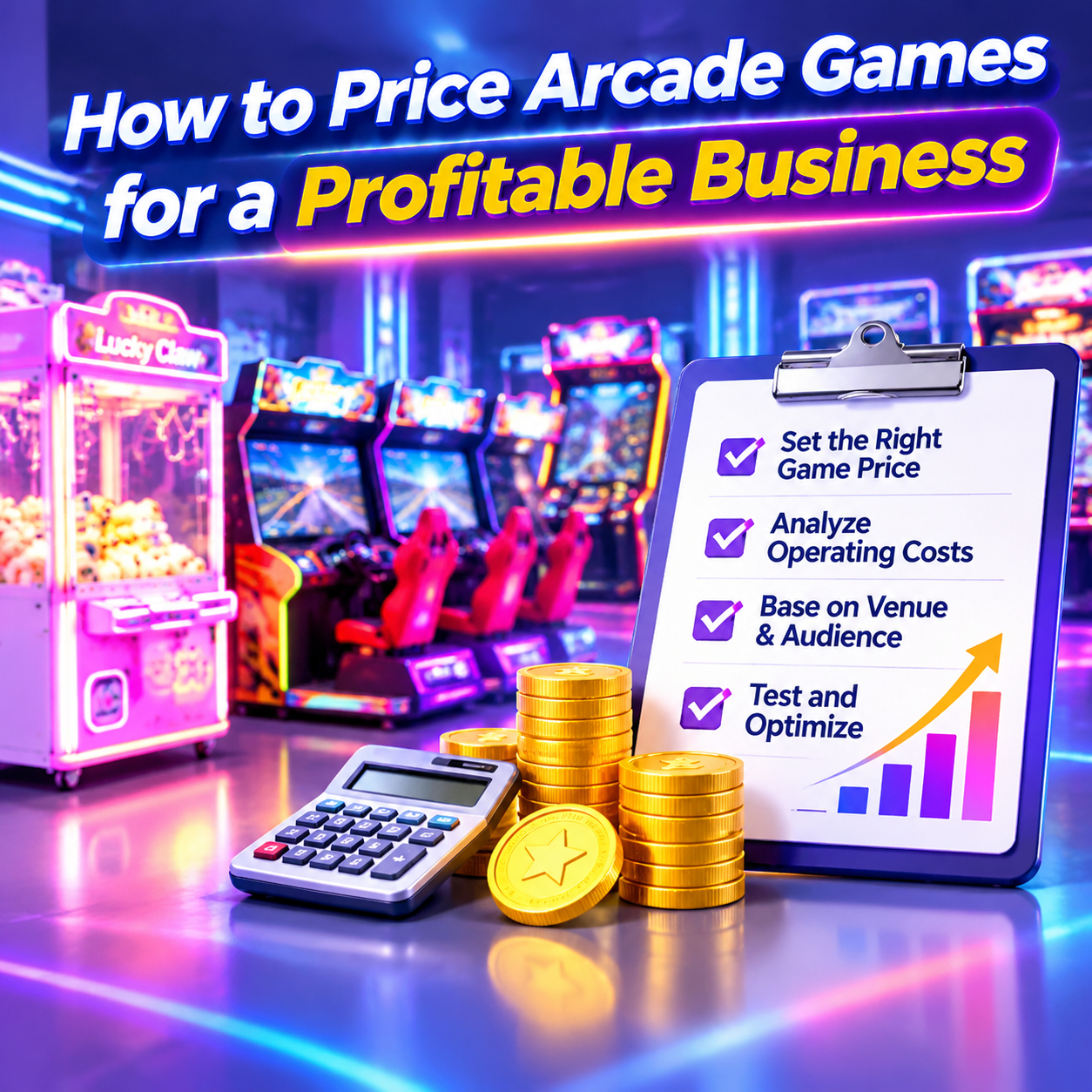
Setting the right prices for arcade games is an important part of running a successful commercial entertainment business. For arcade owners and family entertainment center (FEC) operators, pricing directly influences customer participation, operating expenses, and potential revenue.
If prices are too high, customers may hesitate to play. If prices are too low, the business may struggle to cover equipment investments, rent, electricity, staffing, and maintenance costs.
The challenge is finding a pricing strategy that balances customer affordability with business sustainability.
Different arcade machines also have different operating costs and entertainment value. A large racing simulator may require a different pricing approach from a compact claw machine or a traditional redemption game.
This guide explains how arcade operators can develop practical pricing strategies for different machine categories and customer markets.
1. Calculate Your Basic Operating Costs
Before setting game prices, understand the costs involved in operating your arcade.
The initial machine purchase price is only one part of the investment. Operators should also consider transportation, installation, rent, electricity, employee salaries, maintenance, and spare parts.
For example, a large commercial racing machine may have higher purchase and operating costs than a smaller electronic game.
Create a monthly operating cost estimate and identify how much revenue your venue needs to generate to cover its expenses.
This provides a financial foundation for setting game prices instead of relying entirely on competitor pricing.
2. Consider the Investment Cost of Each Machine
Different arcade machines require different levels of initial investment.
When evaluating individual machines, consider their purchase prices, expected operating life, maintenance requirements, and installation expenses.
You can estimate the equipment investment per operating month by dividing the total equipment investment by your planned recovery period.
However, this is only one component of the overall cost structure. Actual profitability also depends on utilization, operating expenses, and customer demand.
Avoid assuming that expensive equipment must always have a high game price. The final price should reflect the customer experience and local market conditions.
3. Develop Different Pricing Strategies for Different Games
Not every arcade machine should necessarily use the same pricing model.
Different equipment categories offer different gameplay experiences and may attract different customer groups.
Racing Arcade Machines
Racing simulators often feature large displays, steering controls, pedals, and sometimes motion effects.
Operators may consider pricing according to gameplay duration, machine configuration, and local customer expectations.
Multiplayer racing experiences may also offer different pricing opportunities.
Claw Machines
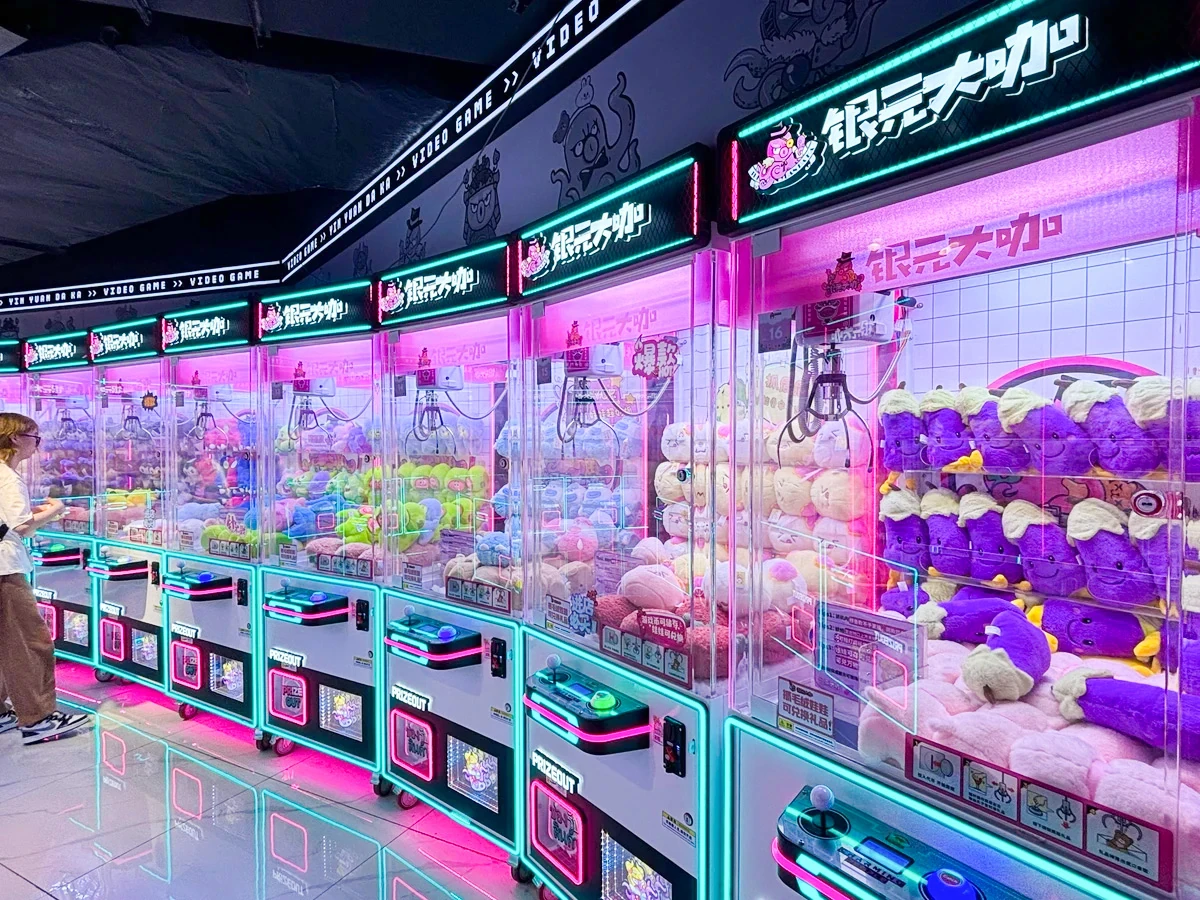
Claw machines commonly use a per-play payment model.
Operators should consider prize costs, machine settings, customer demand, and the overall operating strategy when determining play prices.
Prize selection and machine configuration should be managed responsibly and in accordance with applicable consumer protection requirements.
Basketball and Sports Arcade Machines
Basketball and boxing machines typically offer short competitive gameplay experiences.
Pricing should consider the duration of each session, equipment costs, and the preferences of the target audience.
VR Arcade Equipment
VR attractions may require more complex hardware, additional supervision, and dedicated operating space.
Their pricing may be based on session duration, player capacity, and the overall experience provided.
4. Research Local Competitor Pricing
Understanding the local entertainment market can help operators position their arcade appropriately.
Visit nearby arcades and shopping mall entertainment centers to observe their pricing models.
Compare similar game categories rather than comparing every machine with the same standard.
Consider:
Price per game or session
Available credit packages
Membership discounts
Group promotions
Customer demographics
Overall venue experience
Competitor prices provide useful reference information, but copying them directly is not always the best strategy.
Your equipment configuration, location, customer service, and operating costs may be different.
5. Understand Your Customers' Spending Preferences
Customer demographics influence how much visitors are willing to spend on entertainment.
A family-focused FEC may need affordable options for parents purchasing game credits for children.
An arcade targeting teenagers and young adults may offer different pricing packages for competitive games and group activities.
Consider conducting simple customer surveys or reviewing transaction records to understand purchasing behavior.
Pay attention to how often customers purchase credits, which machines they prefer, and whether they respond positively to package offers.
These observations can help operators develop pricing that suits their actual audience.
6. Introduce Prepaid Credit Packages
Prepaid credit packages can make arcade payments more convenient.
For example, customers may receive additional promotional credits when purchasing larger packages.
A well-designed package can encourage customers to spend more during a visit while simplifying the payment process.
However, discounts should be calculated carefully.
Operators need to understand how promotional credits affect the effective price per game and whether the resulting revenue still covers operating expenses.
Keep package conditions clear, including expiration dates and any restrictions, in accordance with local regulations.
7. Use Cashless Payment to Support Flexible Pricing
Modern arcade venues may use rechargeable cards, wristbands, or supported digital payment systems.
These systems can provide greater flexibility when configuring game credits and promotional packages.
Depending on the management platform, operators may also review transaction records and machine activity.
For example, a centralized system may help identify which machines receive the most customer activity and which pricing packages are frequently purchased.
Before adopting a cashless system, confirm compatibility with your arcade machines and understand the associated hardware, software, and service costs.
8. Review Pricing During Different Seasons
Customer demand may change throughout the year.
Weekends, public holidays, school vacations, and seasonal events can create different traffic patterns.
Operators can review their pricing strategy according to these changes.
For example, family entertainment centers may introduce special packages during school holidays or group promotions during quieter operating periods.
Promotional pricing should be planned carefully to avoid reducing revenue without generating meaningful additional activity.
Monitor the results of each campaign and compare performance with normal operating periods.
9. Monitor Machine Performance and Revenue
Pricing decisions should be based on actual operating information whenever possible.
Track machine-level revenue, play counts, transaction activity, and customer participation.
A machine with high revenue may still have significant operating costs, while a lower-priced attraction may generate consistent customer activity.
Review several indicators together rather than relying on total revenue alone.
If a machine receives limited attention, investigate possible reasons before changing its price.
The problem may involve machine visibility, gameplay appeal, equipment condition, or customer preferences rather than pricing.
10. Work With a Manufacturer That Understands Arcade Operations
Choosing suitable commercial arcade machines is an important part of developing a sustainable pricing strategy.
Different equipment categories have different purchase costs, technical configurations, and operating requirements.
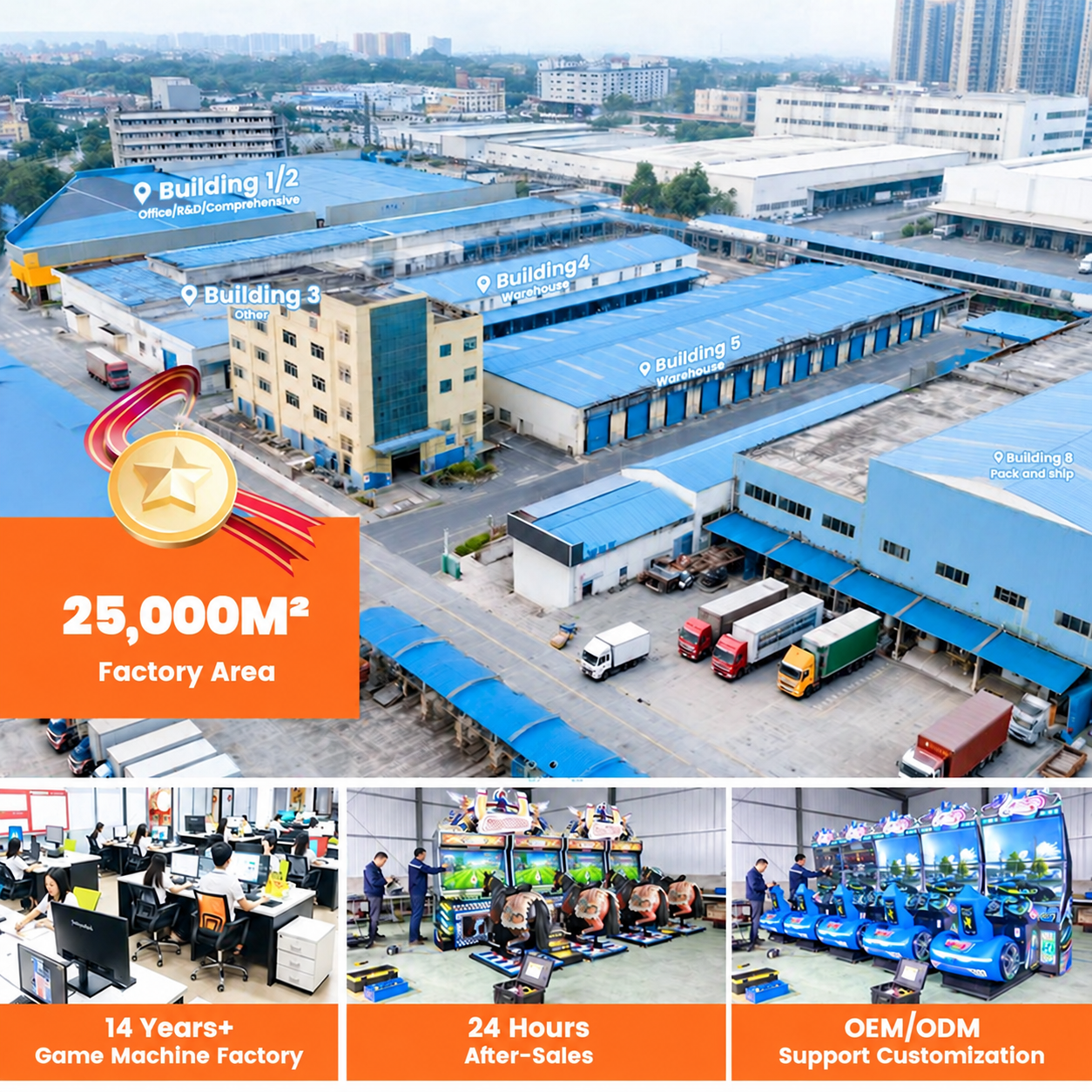
EPARK is a professional commercial arcade machine manufacturer based in Guangzhou, China, with over 14 years of manufacturing experience.
Our product range includes:
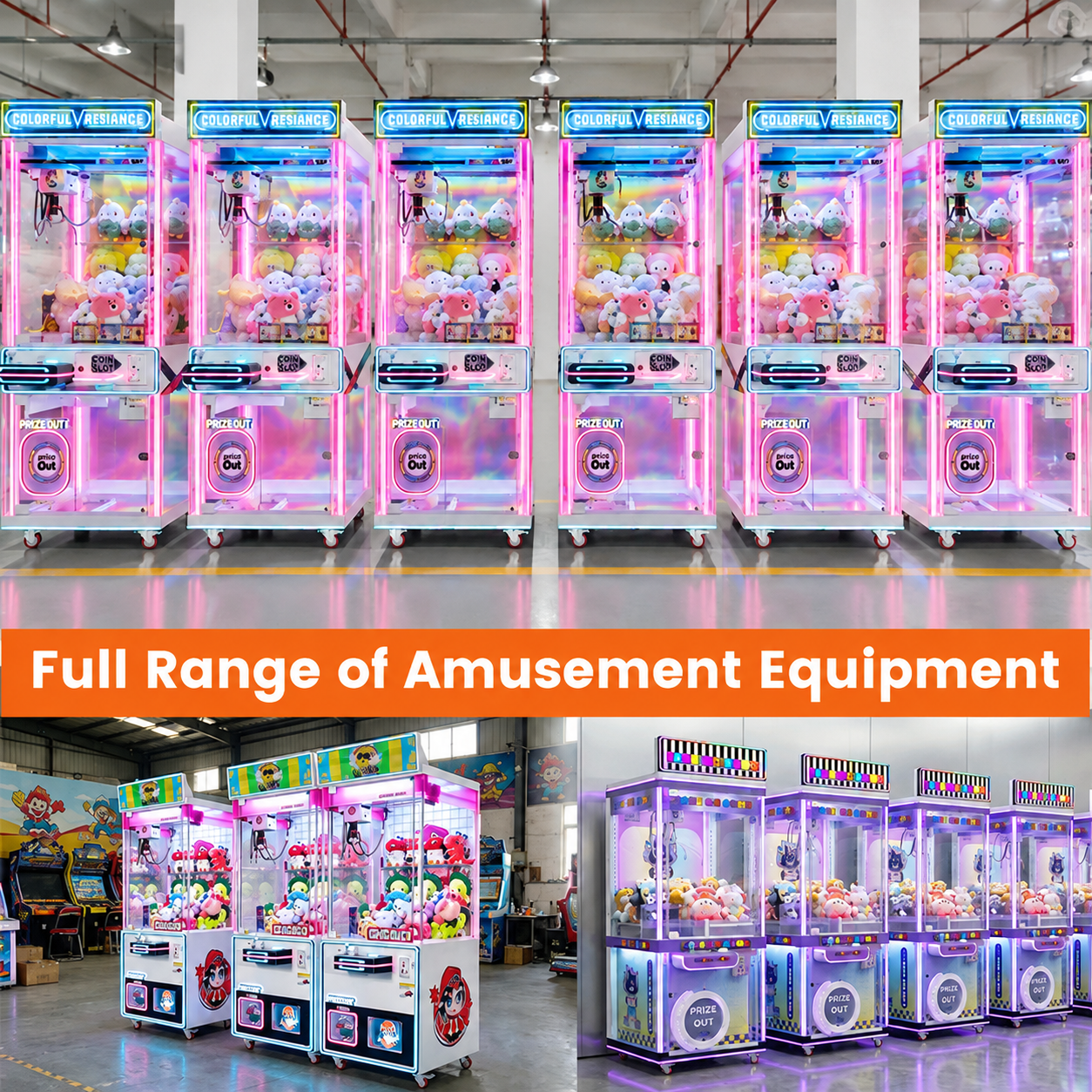
Claw machines and prize machines
Commercial racing arcade games
Basketball and boxing machines
Shooting and redemption game machines
VR entertainment equipment
Air hockey and sports arcade machines
Kiddie rides and indoor amusement equipment
EPARK supports international arcade operators, FEC investors, distributors, and entertainment project owners with equipment selection, product customization, manufacturing, quality inspection, and after-sales assistance.
Our team can help buyers review machine specifications and available configurations when planning a new arcade or upgrading an existing venue.
Visit EPARK Game Machine Factory to explore commercial amusement equipment and entertainment project solutions.
Frequently Asked Questions
How Much Should an Arcade Charge Per Game?
There is no universal price for every arcade machine. Pricing depends on local purchasing power, equipment investment, operating expenses, gameplay duration, and competitor offerings.
Should Different Arcade Machines Have Different Prices?
Yes. Different machines provide different gameplay experiences and have different operating costs. A pricing structure based on equipment categories can help operators manage their business more effectively.
How Can Arcade Owners Increase Revenue Without Raising Game Prices?
Operators can explore prepaid credit packages, improve machine availability, introduce suitable multiplayer attractions, and organize promotional activities. Improving customer experience can also encourage additional participation.
Conclusion
Setting the right arcade game prices requires more than choosing a number that competitors are using.
Operators should consider equipment investment, operating expenses, customer preferences, local market conditions, and machine performance.
A flexible pricing strategy allows entertainment businesses to adjust to changing demand while maintaining a sustainable operating model.
For arcade owners and FEC investors, combining suitable equipment with thoughtful pricing and ongoing performance analysis is an important part of long-term business development.
Visit EPARK Game Machine Factory to explore commercial arcade machines and discuss equipment solutions for your entertainment business.
Table of Contents
- Introduction
- 1. Calculate Your Basic Operating Costs
- 2. Consider the Investment Cost of Each Machine
- 3. Develop Different Pricing Strategies for Different Games
- 4. Research Local Competitor Pricing
- 5. Understand Your Customers' Spending Preferences
- 6. Introduce Prepaid Credit Packages
- 7. Use Cashless Payment to Support Flexible Pricing
- 8. Review Pricing During Different Seasons
- 9. Monitor Machine Performance and Revenue
- 10. Work With a Manufacturer That Understands Arcade Operations
- Frequently Asked Questions
- Conclusion